
Dizziness or unsteadiness can make a walk, a trip to the store, or ordinary daily movement feel less comfortable. If balance concerns are affecting your routine, you may be searching for vestibular therapy Portland residents can access and wondering whether physical therapy is a sensible next step.
Vestibular therapy generally refers to physical rehabilitation for dizziness, vertigo, and balance difficulties. The right care depends on what is causing your symptoms, so an individual clinical evaluation matters. This guide explains what to note before a visit, how to discuss your needs, and how to explore physical therapy in Portland.
Dr. Philip Boamah is a Portland naturopathic doctor and physical therapist who provides physical therapy with personalized planning, manual therapy techniques, and guided exercise protocols. As a Local Healthcare Partner, he emphasizes proactive care shaped around your goals and clinical needs, rather than care that responds only after a problem disrupts daily life. This information is for educational purposes only and is not a substitute for professional medical advice, diagnosis, or treatment.
Key Takeaways
- Dizziness, spinning sensations, or unsteadiness can affect everyday activities. Noting when symptoms occur can help you explain what you are experiencing.
- Vestibular therapy Portland patients may encounter is a form of physical therapy generally focused on dizziness, vertigo, and balance concerns.
- Before a clinical visit, note symptom patterns, affected activities, and relevant health history. These details can help a clinician consider whether physical therapy fits your needs.
- Dr. Boamah brings naturopathic and physical therapy backgrounds to personalized, proactive care as a Local Healthcare Partner in Portland.
Vestibular Therapy in Portland: What Dizziness and Balance Symptoms Can Mean
Dizziness can turn familiar routines into careful calculations. You might feel a spinning sensation when rolling over, become unsteady on a neighborhood walk, or notice discomfort with head movement. These experiences can affect errands, exercise, and confidence getting around, but a symptom by itself does not identify its cause.
Vestibular therapy is a form of physical therapy focused on dizziness, vertigo, and balance concerns. Vestibular rehabilitation therapy (VRT) uses individualized approaches to address these difficulties; the overview of vestibular rehabilitation provides general background. If you are considering vestibular therapy Portland, a clinical evaluation can help determine whether physical therapy is appropriate for your symptoms or whether another assessment is needed.
For a visual introduction, watch this video from Norton Healthcare:
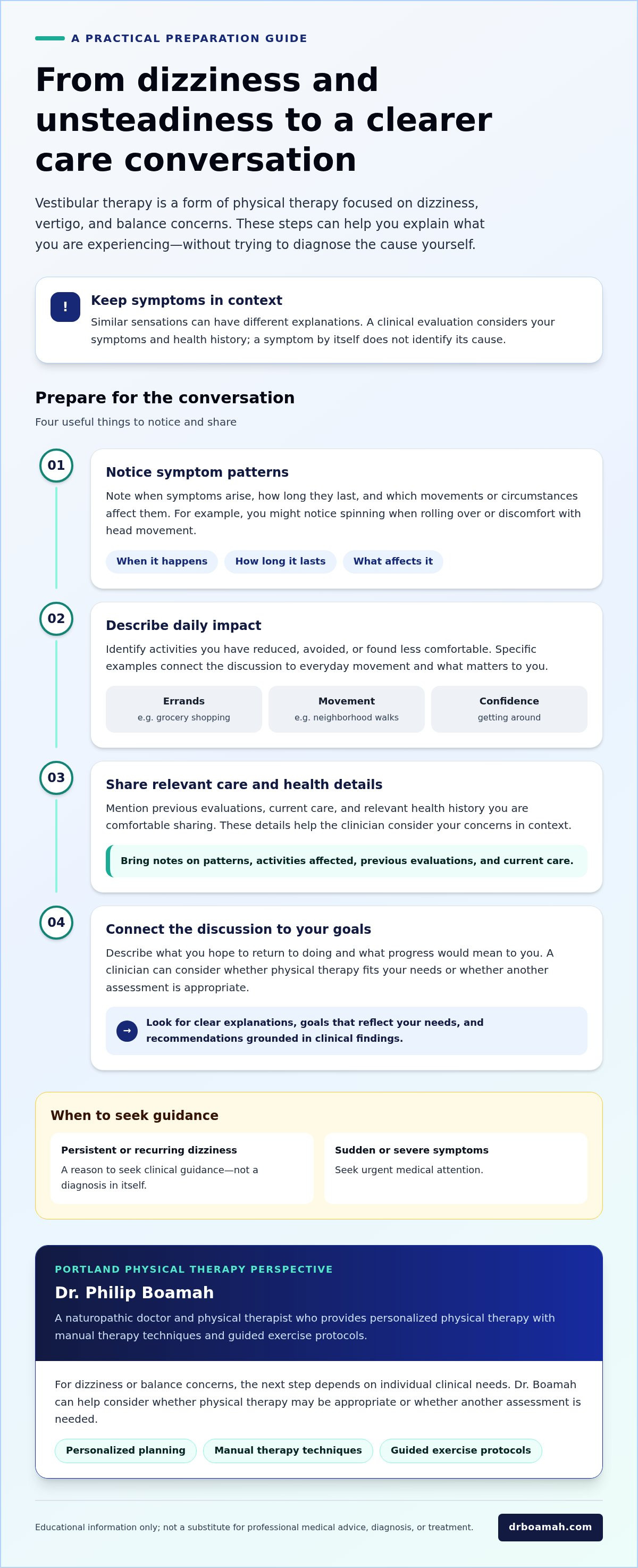
Balance depends on information from multiple body systems, so similar sensations can have different explanations. A clinician considers your symptoms and health history rather than assuming that spinning or unsteadiness points to one particular condition. Before your visit, note when symptoms arise, how long they last, and which movements or activities affect them. This can make the conversation more specific and useful.
When dizziness calls for clinical guidance
Persistent or recurring dizziness is a reason to seek clinical guidance, not a diagnosis in itself. Avoid trying to identify the cause based on symptoms alone. Seek urgent medical attention for sudden or severe symptoms. This article is for educational purposes only and is not a substitute for professional medical advice, diagnosis, or treatment.
How to Decide Whether Vestibular Physical Therapy Fits Your Needs
Start by describing how symptoms affect your daily life, rather than trying to name the cause yourself. A clinician can consider your history and concerns, then help determine whether physical therapy may fit or whether another assessment is appropriate. For people exploring vestibular therapy Portland, the goal is a thoughtful clinical conversation and a plan grounded in individual needs, not a one-size-fits-all routine.
A few notes before your visit can help you explain what is happening. Keep a simple record of symptom patterns and bring relevant health details you are comfortable sharing. The Vestibular Disorders Association (VeDA) also offers general patient information about vestibular symptoms and care.
What to discuss during an initial care conversation
Describe when symptoms tend to occur and how they affect movement or everyday activities. Mention previous evaluations, current care, relevant health history, and what you hope to return to doing. For example, explain if symptoms make grocery shopping difficult or leave you feeling less steady when turning your head. Concrete examples help connect the clinical conversation to your priorities.
- Patterns: Note the circumstances surrounding symptoms and whether they change over time.
- Daily impact: Identify activities you have reduced, avoided, or found less comfortable.
- Care and goals: Share previous evaluations and current care, then describe what progress would mean to you.
When discussing a care plan, look for explanations you can understand, goals that reflect your needs, and recommendations that respond to clinical findings. Dr. Boamah provides physical therapy in Portland as part of a personalized, proactive care approach. Read more about physical therapy with Dr. Boamah.
Explore Physical Therapy with Dr. Boamah, a Portland Healthcare Partner
For Portland patients whose dizziness or balance concerns affect movement, Dr. Philip Boamah can provide a physical therapy perspective and help determine an appropriate next step based on individual clinical needs. As both a naturopathic doctor and physical therapist, he brings a broad healthcare background to conversations about symptoms, function, and personal goals. His physical therapy care includes manual therapy techniques and guided exercise protocols.
Considering vestibular therapy Portland care does not mean assuming one approach suits everyone. Dr. Boamah can discuss whether physical therapy may be appropriate for your concerns or whether another assessment is needed. The University of St. Augustine for Health Sciences offers general background on what vestibular physical therapy is. Your recommendations should reflect your individual circumstances.
A personalized next step for Portland-area patients
As a Local Healthcare Partner, Dr. Boamah emphasizes proactive rather than solely reactive care. That means discussing your clinical needs and priorities instead of assuming one approach fits everyone. You can learn more about what to expect at a naturopathic doctor visit. The practice’s rotator cuff recovery case study offers a separate example of physical therapy care.
Bring your questions and describe how symptoms affect your daily life. To schedule a visit with Dr. Boamah, call 503-688-0046 to discuss an appropriate next step.
Take the Next Step Toward Steadier Days
Dizziness can make ordinary plans feel uncertain, but a clinical conversation can help you decide what to do next. If you are considering vestibular therapy Portland, look for care that takes your symptoms seriously and connects recommendations to your personal goals. Dr. Boamah’s background as a naturopathic doctor and physical therapist informs a personalized, proactive approach rooted in partnership with the Portland community.
You do not need to have every answer before reaching out. Share what has been difficult and what you hope to return to doing, then discuss whether physical therapy may fit your needs. Call 503-688-0046 to schedule an appointment with Dr. Boamah.
Frequently Asked Questions
What is vestibular therapy?
Vestibular therapy is a physical therapy approach for people experiencing dizziness, vertigo, or balance difficulties. Its purpose and methods depend on a person’s clinical needs, so the term does not point to one universal routine. If you are exploring possible care, note how symptoms affect movement and everyday tasks, then discuss those details with a clinician.
Can vestibular therapy help with dizziness or vertigo?
It may be appropriate for some people, but whether physical therapy fits depends on the cause of symptoms and an individual clinical evaluation. Dizziness and vertigo can have different explanations, so do not assume a particular treatment will help. If symptoms affect activities such as walking, turning, or shopping, describe those specific challenges during a clinical conversation.
What happens during a vestibular therapy evaluation?
An evaluation generally starts with a discussion of your symptoms, relevant health history, and how dizziness or balance changes affect your goals. The clinician uses that context to consider whether physical therapy is suitable or whether another assessment may be needed. Bring notes about symptom patterns and a list of previous evaluations or current care to help guide the conversation.
How do I find vestibular therapy in Portland?
If you are exploring vestibular therapy Portland services, start by discussing your balance or dizziness concerns with a local physical therapist. Dr. Boamah provides physical therapy in Portland, and a clinical conversation can help clarify an appropriate next step. Discuss how recommendations will reflect your goals and clinical findings, and share the activities you hope to manage more comfortably.


