
A sports injury doesn’t have to end a young athlete’s season for good. Children can receive physical therapy and rehabilitation for sports injuries, with care tailored to their age, symptoms, and activity goals. For families searching for help with pediatric sports injuries in Beaverton, the next step depends on the injury and how it affects everyday movement.
It’s natural to want your child to recover safely and stay active and confident. This guide covers common youth sports injuries, when to seek care, and how rehabilitation can support a gradual return to activity.
You’ll also learn how personalized physical therapy and integrative care can help young athletes build strength, improve movement, and follow a plan suited to their needs.
Key Takeaways
- A pediatric physical therapy evaluation can consider a young athlete’s movement, strength, symptoms, and sport-specific demands.
- Recognizing how an injury affects daily activities and athletic performance can help families decide when to seek care.
- Learn practical ways to support safer participation and understand the role of rehabilitation in returning to sport.
- Explore how Dr. Philip Boamah | Natural Medicine & Physical Therapy can support young athletes through physical therapy and naturopathic primary care.
Do you offer physical therapy for kids?
Children can receive physical therapy for sports injuries. An evaluation considers the young athlete’s symptoms, sport, and daily activities, along with movement, strength, balance, and the affected area. For example, a therapist may observe how a child walks, squats, or steps down to identify pain or uneven control. This movement assessment helps tailor rehabilitation to the child.
Before sports participation, a sports physical can help identify health concerns and support safer activity. Regular physical activity supports normal growth and development, while balancing activities can help reduce overuse injuries and burnout. A child who plays soccer and runs track, for example, can discuss training demands and recovery time during an evaluation.
To learn more about sports injuries in young athletes, watch this video:
Pediatric physical therapy can use play-based activities to build coordination and strength. A therapist might use a balance game, controlled hopping, or reaching exercises to practice sport-related movements. The goal is to help children regain function with exercises suited to their age and activities.
Injury screening also considers the tissue involved. Ligaments connect bones, while tendons connect muscle to bone, and pain in either can affect movement. Possible fractures need medical assessment. Persistent pain or difficulty using a limb may warrant evaluation by a pediatrician and, when appropriate, a referral. Sharing when symptoms began and which movements worsen discomfort can help guide the next steps.
Sports injury prevention, diagnosis, treatment, and rehabilitation
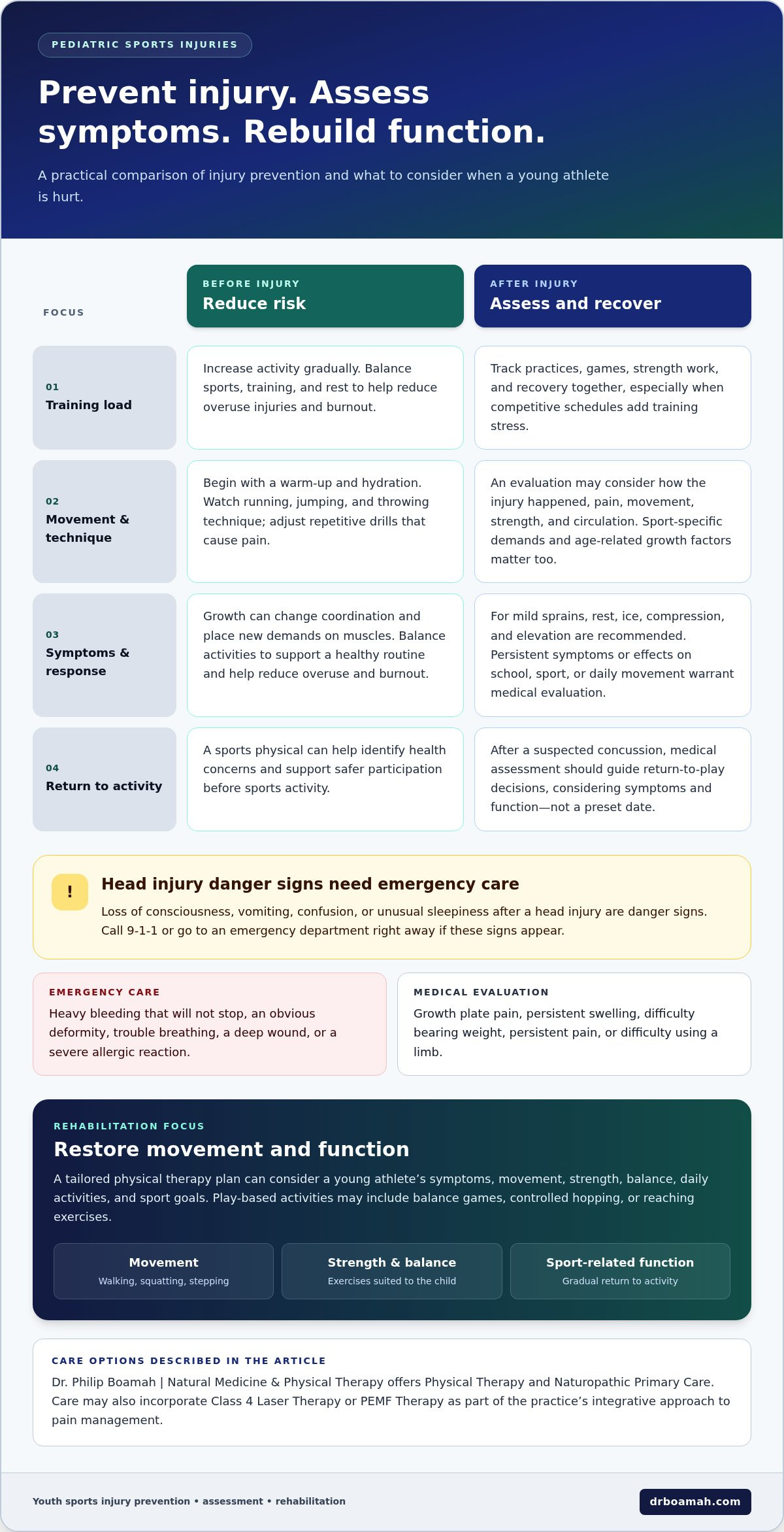
Young athletes can reduce injury risk through balanced training, sound technique, and recovery. After a suspected concussion, medical assessment should guide return-to-play decisions. Danger signs after a head or body jolt require immediate action.
Young Athlete Injury Prevention
Begin training with a warm-up and hydration, and increase activity gradually. Coaches and families can watch running, jumping, and throwing technique, then adjust repetitive drills that cause pain. Growth can change coordination and place new demands on muscles. Balancing sports, training, and rest helps reduce overuse and burnout while keeping physical activity part of a healthy routine.
High School Athlete Injury Care
Competitive schedules can add training stress, so track practices, games, strength work, and recovery together. High-impact sports such as soccer, football, and basketball are ACL injury risk factors, and rapid growth can also affect movement demands. For Oregon athletes, return to play after a suspected concussion should follow medical assessment and consider symptoms and function, not a preset date.
Injury Diagnosis, Treatment, and Rehabilitation
An evaluation considers how the injury happened, pain, movement, strength, and circulation. For mild sprains, rest, ice, compression, and elevation are recommended. Persistent symptoms or effects on school or sport warrant an appointment. A head injury involving loss of consciousness, vomiting, confusion, or unusual sleepiness needs emergency care. After a bump, blow, or jolt, call 9-1-1 or go to an emergency department right away if danger signs appear, according to the Centers for Disease Control and Prevention (CDC). A tailored sports injury care plan can help guide rehabilitation and return to activity.
Pediatric sports medicine providers in Beaverton
For pediatric sports injuries in Beaverton, care depends on the injury’s severity and the child’s needs. An evaluation should consider symptoms, sport demands, and age-related factors such as growth plate vulnerability.
Finding Local Pediatric Sports Medicine Providers
Sports medicine care may involve a physician, rehabilitation specialist, athletic trainer, and physical therapist. For sprains or strains, look for an assessment of pain, movement, strength, and the child’s sport-specific goals. Injury patterns vary by age and activity; teens may experience bony injuries more often than muscle or ligament injuries. Growth plate pain, persistent swelling, or difficulty bearing weight warrant medical evaluation.
In Beaverton, families can seek a sports injury assessment through a pediatrician or sports medicine provider. After the injury has been evaluated, a physical therapist may support rehabilitation. Ask what the visit will address: diagnosis, treatment planning, injury prevention, or a safe return to activity. This helps match the appointment to the child’s needs.
Urgent Sports Injury Care
For a non-emergency injury, a pediatrician or sports medicine clinic can assess ongoing pain, swelling, or reduced movement. Check the chosen Beaverton clinic’s address and schedule when planning a visit. A child with heavy bleeding that won’t stop, an obvious deformity, trouble breathing, a deep wound, or a severe allergic reaction needs emergency care.
After a head injury, loss of consciousness, vomiting, confusion, or unusual sleepiness are danger signs requiring emergency care. For continuing symptoms after initial care, schedule a physical therapy visit to discuss rehabilitation and movement goals.
Dr. Philip Boamah | Natural Medicine & Physical Therapy: Naturopathic Primary Care
Dr. Philip Boamah | Natural Medicine & Physical Therapy offers Naturopathic Primary Care and Physical Therapy as options for families addressing a young athlete’s health and recovery needs. Physical therapy can support rehabilitation by focusing on movement and function, while primary care offers a broader approach to health. Care may also incorporate Class 4 Laser Therapy or PEMF Therapy as part of the practice’s integrative approach to pain management.
Consider an appointment if an injury continues to affect a child’s movement, daily activities, or return to sport after an initial assessment. The next step depends on the child’s symptoms and needs. For severe injuries or danger signs, seek emergency care rather than waiting for a routine appointment.
To discuss care for your child, call Dr. Philip Boamah | Natural Medicine & Physical Therapy at 541-390-1677 to book a visit.
Help Your Young Athlete Take the Next Step
Recovery can help a young athlete understand their body, rebuild confidence, and make thoughtful choices about returning to activities they enjoy. For families dealing with pediatric sports injuries in Beaverton, discuss the child’s symptoms, everyday movement, and goals for getting back to play. These details can make a conversation about care more focused and personal.
Dr. Philip Boamah | Natural Medicine & Physical Therapy can help families explore care options suited to a child’s needs. If you’re ready to talk about your child’s next step, contact Dr. Philip Boamah | Natural Medicine & Physical Therapy, or call 541-390-1677 to book a visit. With a supportive plan, your young athlete can keep moving toward a confident return to the activities they love.
Frequently Asked Questions
Does my child need a referral to see a pediatric orthopedic specialist?
Referral requirements depend on the specialist’s intake process and your insurance plan. A pediatrician can assess the injury, document symptoms, and help determine whether orthopedic evaluation is appropriate. Persistent pain, limited movement, or difficulty bearing weight may merit further assessment. Review your plan’s referral rules before booking so you understand any steps required for coverage.
How is pediatric orthopedic care different from adult care?
Pediatric orthopedic care accounts for growth and developing bones, not just the injured joint. A clinician may consider whether pain involves a growth plate, how the injury affects movement, and which activities the child hopes to resume. For example, knee pain during a growth spurt may need a different evaluation than similar pain in a fully grown adult.
What pediatric sports injury clinics and specialists serve Beaverton, Oregon?
Care for young athletes can involve a pediatrician, sports medicine physician, orthopedic specialist, athletic trainer, or physical therapist. The right starting point depends on the injury and whether the child needs diagnosis, rehabilitation, or both. Dr. Philip Boamah provides physical therapy and pediatric services in the Portland area, including care for families seeking pediatric sports injuries Beaverton. Choose care that fits your child’s needs.
Which Beaverton-area pediatric sports medicine providers accept new patients?
New-patient availability frequently changes, so it is recommended to contact clinics directly to confirm which Beaverton-area providers are currently accepting new patients. Dr. Philip Boamah offers physical therapy and pediatric services in the Portland and Beaverton region to help young athletes recover. For a child with an injury, focus on finding care suited to the symptoms and the type of evaluation or rehabilitation needed.
What sports injuries are most common in children and teens in Beaverton?
Young athletes can experience sprains, strains, overuse injuries, and bone injuries, including stress fractures. Repetitive running and jumping may contribute to heel pain associated with Sever’s disease, while Osgood-Schlatter disease can cause pain below the knee. Injury patterns vary with age and sport. This article is for educational purposes only and is not a substitute for professional medical advice, diagnosis, or treatment.
To book a visit, call Dr. Philip Boamah | Natural Medicine & Physical Therapy at 541-390-1677.


