
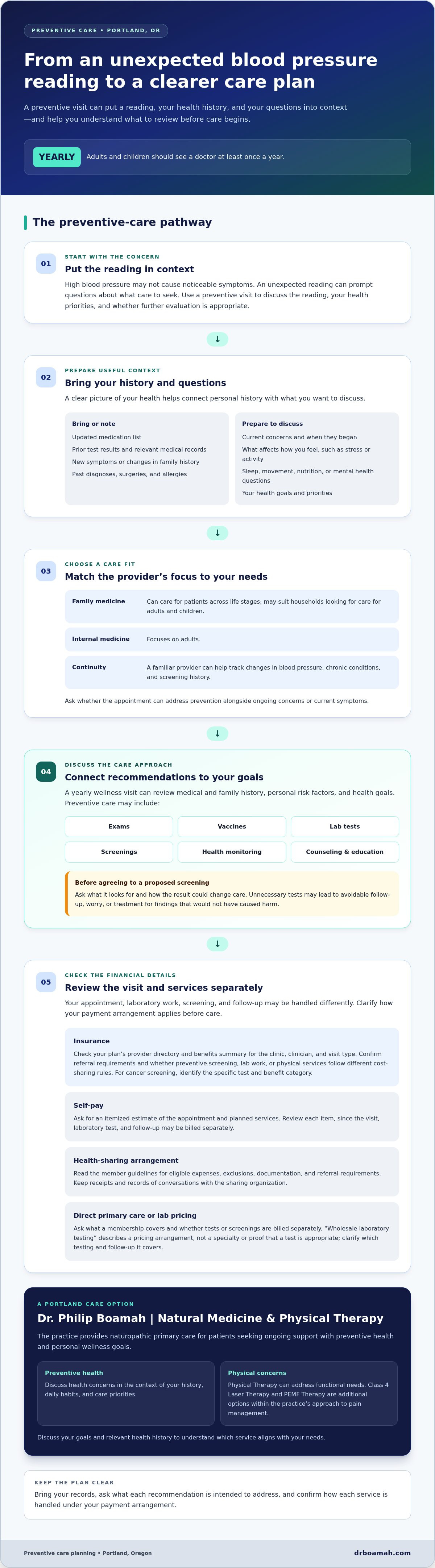
High blood pressure may not cause noticeable symptoms, so an unexpected reading can raise questions about what care to seek. A preventive visit gives you a chance to discuss the reading, your health priorities, and whether further evaluation is appropriate. A preventative healthcare doctor in Portland, OR can help you put those concerns in context.
Planning care also means understanding how your insurance or health-sharing arrangement applies. The visit and any recommended services may be handled differently, so knowing what to ask can help you make informed decisions.
This guide explains what to expect from preventive care, how to consider primary care approaches and ongoing support, and which payment questions to review as you plan your next step.
Key Takeaways
- Plan a preventive visit each year and use it to review your health history, goals, and appropriate screenings.
- Understand how family medicine, internal medicine, and preventive care can support health needs at different life stages.
- Before your appointment, clarify how your insurance or health-sharing arrangement handles the visit and any recommended services.
- Consider whether an integrative primary care approach fits your wellness goals and the support you’re seeking.
What Is Annual Preventative Physical?
An annual preventive physical reviews health before a concern disrupts daily life. Adults and children should see a doctor at least once a year.
Physician Specialties and Preventive Focus
Family medicine providers can care for patients across life stages, while internal medicine focuses on adults. In Portland, consider which specialty suits your household and whether the appointment addresses prevention alongside ongoing concerns. A yearly wellness visit includes medical and family history review, according to the Centers for Medicare & Medicaid Services. This context helps providers shape a visit around personal risk factors and health goals.
Continuity With a Familiar Provider
Seeing a familiar provider can make it easier to track changes in blood pressure, chronic conditions, and screening history. Before each appointment, bring an updated medication list and note new symptoms or changes in family history. For children, a provider can advise on appropriate checkup timing. Portland families may also consider whether a practice can address both adult and pediatric needs.
Adult Preventive Care and Screening Risks
For adults, preventive care may include exams, vaccines, lab tests, screenings, health monitoring, counseling, and education, according to the Centers for Medicare & Medicaid Services. A provider can review blood pressure and health history, then discuss which services fit the patient’s needs. Unnecessary tests may lead to avoidable follow-up, worry, or treatment for findings that would not have caused harm. Ask what a proposed screening looks for and how its result could change care. If considering direct primary care, ask what the membership covers and whether tests or screenings are billed separately; the fee depends on the services included.
Preventive medicine physicians in the Portland area
For a first preventive care appointment, bring your medication list, prior test results, and relevant medical records. Note family health conditions and current concerns, and prepare questions about sleep, movement, nutrition, or mental health. This helps connect your personal history with the topics you want to discuss.
A preventative healthcare doctor in Portland, OR may practice family medicine, internal medicine, or another primary care specialty. Consider each provider’s focus and whether it matches your needs. Family medicine may suit households seeking care across life stages, while internal medicine focuses on adult care. Ask how the appointment can address prevention alongside current symptoms.
When choosing a preventative healthcare doctor in Portland, OR, look for a clear approach to reviewing lifestyle and medical history. Be ready to describe a concern, when it began, and what affects it. For example, note whether stress or activity changes how you feel. Share past diagnoses, surgeries, medications, allergies, and relevant family history to give the provider useful context.
Laboratory testing and medications are separate decisions from choosing a physician. “Wholesale laboratory testing” refers to a pricing arrangement, not a specialty or proof that a test is appropriate. Ask what a proposed test evaluates and how the result may inform care. If wholesale lab pricing comes up, clarify which testing and follow-up it covers. Medication choices should also take your health history and treatment goals into account.
Insurance and health-sharing considerations
Before booking a physical, understand how your payment arrangement applies to the appointment, tests, and follow-up. Review the clinician’s visit separately from laboratory work, screening, or other services.
Accepted Insurance
A carrier’s name alone doesn’t tell you whether a specific clinic participates in your plan. Review your plan’s provider directory and benefits summary for the clinic, visit type, and clinician. Note whether primary care requires a referral, and whether preventive screening, lab work, or a physical service follows different cost-sharing rules. For cancer screening, identify the test and benefit category rather than assuming every related service is covered the same way. Keep the clinic name, plan name, and member identification details together when comparing records.
In Oregon, plan materials can also explain financial assistance terms, eligibility criteria, and application steps. These are separate from insurance coverage.
Insurance and Self-Pay
If you’re paying directly, ask for an itemized estimate of the appointment and any planned services. A visit, laboratory test, and follow-up may be billed separately, so review each item against your budget. A screening recommendation does not establish how it will be covered.
For a health-sharing arrangement, read the member guidelines for eligible expenses, exclusions, documentation, and referral requirements. Compare those terms with the care you’re considering, including any physical service. Keep receipts and records of conversations with the sharing organization. This gives you a clearer picture of your financial responsibility before choosing care and helps preserve a straightforward relationship with the practice.
Dr. Philip Boamah | Natural Medicine & Physical Therapy: Naturopathic Primary Care
Dr. Philip Boamah | Natural Medicine & Physical Therapy provides naturopathic primary care for patients seeking ongoing support with preventive health and personal wellness goals. In Portland, this local healthcare partner takes a proactive approach, helping patients discuss health concerns in the context of their history, daily habits, and care priorities.
For movement limitations or physical concerns affecting everyday activity, Physical Therapy can address functional needs. Class 4 Laser Therapy and PEMF Therapy are additional options within the practice’s approach to pain management. Discuss your goals and relevant health history during an appointment to understand which service aligns with your needs.
For preventive care or support with physical concerns, call 541-390-1677 to book your visit.
Make Your Next Health Step Count
A preventive visit can be a chance to shape care around what matters to you, not just complete a routine appointment. Before booking, decide which health goals or concerns you want to discuss and gather your insurance questions. Dr. Boamah’s Portland practice offers naturopathic primary care alongside physical therapy, with a proactive focus on wellness. Contact the clinic to discuss your care needs and next steps.
If you’re ready to discuss care that fits your goals, contact Dr. Philip Boamah | Natural Medicine & Physical Therapy. Call 541-390-1677 to book your visit. A thoughtful conversation is a positive place to begin building a preventive care plan that feels right for you.
Frequently Asked Questions
Do you take my insurance?
The practice lists Oregon Health Plan (OHP), Regence Blue Cross/Blue Shield, United Health Plan, Aetna, Pacific Source commercial plans, and Moda Health. Your specific policy determines which benefits apply, so compare its exact plan name and coverage details before arranging care. Health-sharing arrangements are separate from the insurance plans listed.
How do I choose a provider?
Start by identifying your main goal, such as ongoing primary care, support for a chronic concern, or help with movement. Then consider which clinician and care approach fit that need. Write down what you want help with and what a useful next step would look like to keep the first conversation focused.
What is an annual exam?
An annual exam is a planned visit to review your health and discuss preventive needs. It can also give you time to raise a new concern, even if you feel well overall. If you have a symptom, describe when it began and how it affects daily life. That context helps clarify what you want addressed.
What is preventive medicine?
Preventive care aims to support health and help identify concerns early. It can include guidance on health habits and appropriate steps to check for potential issues, rather than responding only after symptoms interfere with daily life. Website information is for educational purposes only and is not a substitute for professional medical advice, diagnosis, or treatment.
What is primary care?
Primary care provides ongoing support for a range of everyday health needs, rather than focusing on only one body system or concern. A primary care clinician can assess health questions and coordinate further evaluation or specialist care when needed. In Portland, naturopathic primary care offers a natural-medicine approach within this broader role.


