
Heel or lower-calf pain can make walking, exercise, and everyday routines harder, especially when you are unsure which activities to change. Achilles tendonitis rehab Beaverton patients can use starts with understanding what may be contributing to the pain and how it affects movement. A gradual, individualized approach can help guide a return to activity without assuming that complete rest or pushing through discomfort is the answer.
Dr. Boamah provides physical therapy for Beaverton-area patients from his Hillsboro practice, serving the Portland area. As a naturopathic doctor and physical therapist, he assesses movement and strength, then builds next steps around your needs and goals. This guide explains practical rehab principles and how physical therapy can support a considered return to activity.
Key Takeaways
- Heel or lower-calf pain can have different causes. An assessment can help clarify what may be contributing before you choose a rehab approach.
- Achilles tendonitis rehab Beaverton patients can pursue may involve modifying activities that aggravate symptoms, then gradually rebuilding capacity instead of stopping all movement.
- Dr. Boamah’s physical therapy includes an individualized assessment, manual therapy, and guided exercise to support your functional goals.
- Tracking symptoms and everyday function can help you and your physical therapist make decisions based on how you respond, rather than following a one-size-fits-all plan.
Achilles Tendonitis in Beaverton: What the Pain May Mean
Pain near the heel or lower calf can make a familiar walk, run, or climb up a Beaverton-area hill more difficult. Stairs and standing for a while may also become uncomfortable. The Achilles tendon connects the calf muscles to the heel, but pain in that area alone cannot confirm what is causing your symptoms.
Achilles tendinopathy is a general term for a problem affecting the Achilles tendon, which may involve pain and reduced ability to handle activity. “Tendonitis” is commonly used, but symptoms need assessment rather than self-diagnosis. An overview of Achilles tendinitis can provide general background, but it cannot determine the cause of your particular pain.
When Achilles pain deserves an individualized assessment
The pattern of your symptoms matters. A clinician can ask where the discomfort is, when it began, what changed in your activity, and which tasks have become difficult. For example, pain that began after increasing running or hill walking is useful context, as is difficulty with routine walking. Sharing when symptoms appear and what activities they affect helps Dr. Boamah assess your movement and function and develop a rehabilitation plan suited to your needs.
Symptom relief may make movement more comfortable, while rebuilding tendon capacity helps prepare you for activity. Both may be relevant, and the right emphasis depends on your assessment. Achilles tendonitis rehab Beaverton patients pursue should reflect the activities they want to return to, not just where it hurts. For general information about a modality used in physical medicine, read Dr. Boamah’s article on high-intensity laser therapy benefits. It does not make a promise about Achilles-specific results.
Achilles Tendonitis Rehab: Practical Steps for a Gradual Return to Activity
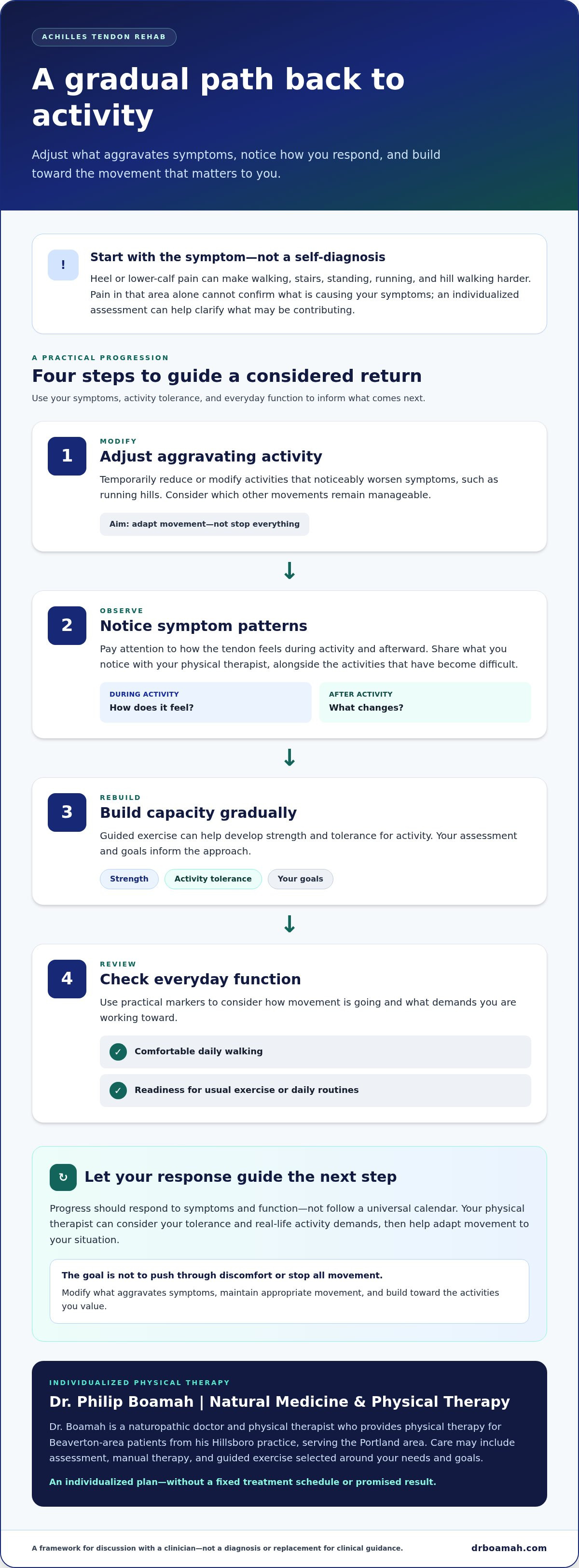
A considered rehab plan does not require choosing between pushing through pain and stopping all movement. The goal is to modify activities that aggravate symptoms while maintaining appropriate movement, then build toward the tasks you want to do. These steps offer a framework, not a diagnosis or a replacement for guidance from a clinician.
- Adjust aggravating activity. Temporarily reduce or modify activities that noticeably worsen symptoms, such as running hills. Consider which other movements remain manageable.
- Notice symptom patterns. Pay attention to how the tendon feels during activity and afterward. Share these observations with your physical therapist, who can consider them alongside your function.
- Build capacity gradually. Guided exercise can help develop strength and tolerance for activity. Your assessment and goals inform the approach.
- Review everyday function. Consider practical markers such as comfortable walking and readiness for the demands of your usual exercise or daily routine.
Modifying activity does not mean becoming completely inactive. Your tolerance matters. A clinician can help you adapt movement to your situation instead of relying on a rule that may not fit you.
How rehab can progress without rushing the return
Progress should respond to symptoms and function, not follow a universal calendar. For one person, comfortable walking may be the first meaningful marker. Another person may want to prepare for longer walks, hills, or running. A physical therapist can use these real-life demands to guide decisions rather than assuming everyone needs the same exercises.
Depending on your assessment, physical therapy may include guided exercise and manual therapy. Dr. Boamah selects these approaches around your needs rather than applying a fixed package. For related context on individualized physical therapy, see rotator cuff recovery without surgery. That article is not evidence about Achilles treatment. Beaverton-area readers can learn about Dr. Boamah’s physical therapy for assessment-led support in the Portland area.
Personalized Achilles Rehab Near Beaverton with Dr. Boamah
Achilles rehab should reflect the person, not just the tendon. Dr. Philip Boamah is a naturopathic doctor and physical therapist who provides physical therapy for Beaverton-area patients from his Hillsboro practice. Serving the Portland area, he offers individualized support for people working toward movement and activity goals.
An assessment connects your symptoms with the activities that matter to you. Whether your priority is comfortable daily walking, recreational exercise, or the hills and trails in your routine, sharing those goals helps shape your care. Physical therapy may include an assessment, manual therapy, and guided exercise selected for your needs. The plan is individualized, without a promised result or fixed treatment schedule.
What to expect when taking the next step
Expect a collaborative conversation about what you are feeling, when symptoms arise, which activities have changed, and what you hope to resume. Dr. Boamah can use your movement and function to inform physical therapy recommendations. You will have an opportunity to discuss how the proposed care relates to the demands of your everyday life and activity goals.
If you are ready to explore personalized physical therapy care for Achilles symptoms near Beaverton, call 541-390-1677 to schedule an appointment with Dr. Boamah.
Take Your Next Step Toward Confident Movement
Returning to the activities you value starts with a clear, manageable next step, not pressure to rush your recovery. If heel or lower-calf symptoms are making you hesitate, an individualized physical therapy assessment can help you discuss your concerns and consider a path forward that reflects your needs. Beaverton-area patients seeking Achilles tendonitis rehab can connect with Dr. Boamah’s Hillsboro practice, serving the Portland area.
Dr. Boamah brings his training as a naturopathic doctor and physical therapist to his care. You can discuss your symptoms, goals, and possible next steps, with guidance shaped around your situation rather than a guaranteed timeline. Ready to move forward? Call 541-390-1677 to schedule an appointment. A thoughtful first step can help you work toward returning to movement with greater confidence.
Frequently Asked Questions
How long does Achilles tendonitis rehab usually take?
There is no single recovery schedule that fits everyone. The time needed can depend on how long symptoms have been present, your daily and exercise demands, and how your tendon responds as activity changes. Rather than relying on a target date, notice whether everyday tasks are becoming more manageable and discuss persistent or worsening symptoms with a clinician.
Can I keep walking or exercising with Achilles tendon pain?
Activity can often be adjusted rather than stopped completely, but the right amount depends on your symptoms and function. If a walk or workout noticeably increases pain, modify that activity and pay attention to how you feel afterward. Your tolerance can help guide decisions, but do not assume you must either rest completely or push through discomfort.
Does Achilles tendonitis always need surgery?
No. Surgery is not an automatic step for Achilles tendon pain. A clinician can assess the problem and discuss appropriate options, including whether non-surgical care may be suitable. If symptoms continue despite rehabilitation, seek further medical guidance to understand possible next steps. The decision depends on your individual situation, so pain alone does not mean surgery is necessary.
When should I seek prompt medical evaluation for Achilles pain?
Seek prompt medical evaluation if pain begins suddenly with a pop, you cannot push off the foot or bear weight, or swelling and bruising appear after an injury. These symptoms need timely assessment. If pain is worsening or substantially limiting daily movement, arrange an evaluation to clarify what may be causing it.
To discuss your Achilles symptoms and physical therapy options with Dr. Boamah, call 541-390-1677 to book an appointment.


