
A “normal” lab result doesn’t always explain persistent fatigue. If you’re tired of being told your labs are normal, it may help to look beyond one result and consider symptoms, changes over time, sleep, stress, and other factors together. Thyroid testing may also need more context than TSH alone.
It’s frustrating to hear that your results fall within a reference range when you still don’t feel like yourself. Your fatigue is real, and normal results don’t mean there’s nowhere else to look.
Learn what can contribute to fatigue despite normal results, how a primary care clinician can help investigate it, and how thyroid tests and lab ranges fit into the bigger picture. The aim is a clearer next step toward understanding your energy.
Key Takeaways
- Persistent fatigue can have several contributing factors, even when routine blood tests fall within their reference ranges.
- Looking at symptoms, sleep, stress, and lab trends together can help shape a more useful conversation about next steps.
- When thyroid concerns remain, testing beyond TSH may offer additional context about thyroid function.
- Lab ranges are one part of the picture; for example, the National Institute of Diabetes and Digestive and Kidney Diseases gives 100-125 mg/dL as the fasting-glucose range for prediabetes.
What kind of doctor helps with unexplained fatigue?
A primary care clinician can review persistent fatigue, symptoms, and previous test results. An integrative approach may also consider sleep, stress, nutrition, and lab trends together. If you’re tired of being told your labs are normal, bring your ongoing symptoms to a conversation focused on what to explore next.
Limits of Routine Blood Tests
Routine blood tests screen for selected conditions, so normal results don’t rule out every cause of fatigue. A blood draw is a snapshot, while symptoms may reflect interacting factors or changes that a particular test doesn’t measure.
When symptoms persist but lab results are normal, it means those tests haven’t identified an explanation, not that the fatigue isn’t real. Low iron stores can occur without anemia, while sleep problems or medication effects may not show up on routine bloodwork.
Medical Approaches to Persistent Fatigue
Integrative and functional medicine approaches consider possible root causes alongside standard testing. Depending on your symptoms, a clinician may review a full blood count, ferritin, vitamin B12, folate, vitamin D, blood sugar, insulin, or inflammatory markers.
Prepare for an appointment by bringing previous results, a medication list, and notes about sleep, energy patterns, and brain fog. Reviewing these details can help focus the discussion on which tests fit your symptoms.
Possible Causes Beyond Routine Results
Sleep disorders, chronic stress, medication effects, and lingering symptoms after COVID-19 can contribute to fatigue despite normal routine blood tests. Hormone shifts, low iron without anemia, or unresolved illness may also be considered as possible causes.
Sleep disorders, medications, stress, or long COVID can affect energy without appearing on routine bloodwork. Seek urgent evaluation for sudden, severe symptoms such as chest pain, difficulty breathing, fainting, or new confusion. If you’re tired of being told your labs are normal, discuss persistent symptoms and practical next steps with a healthcare professional.
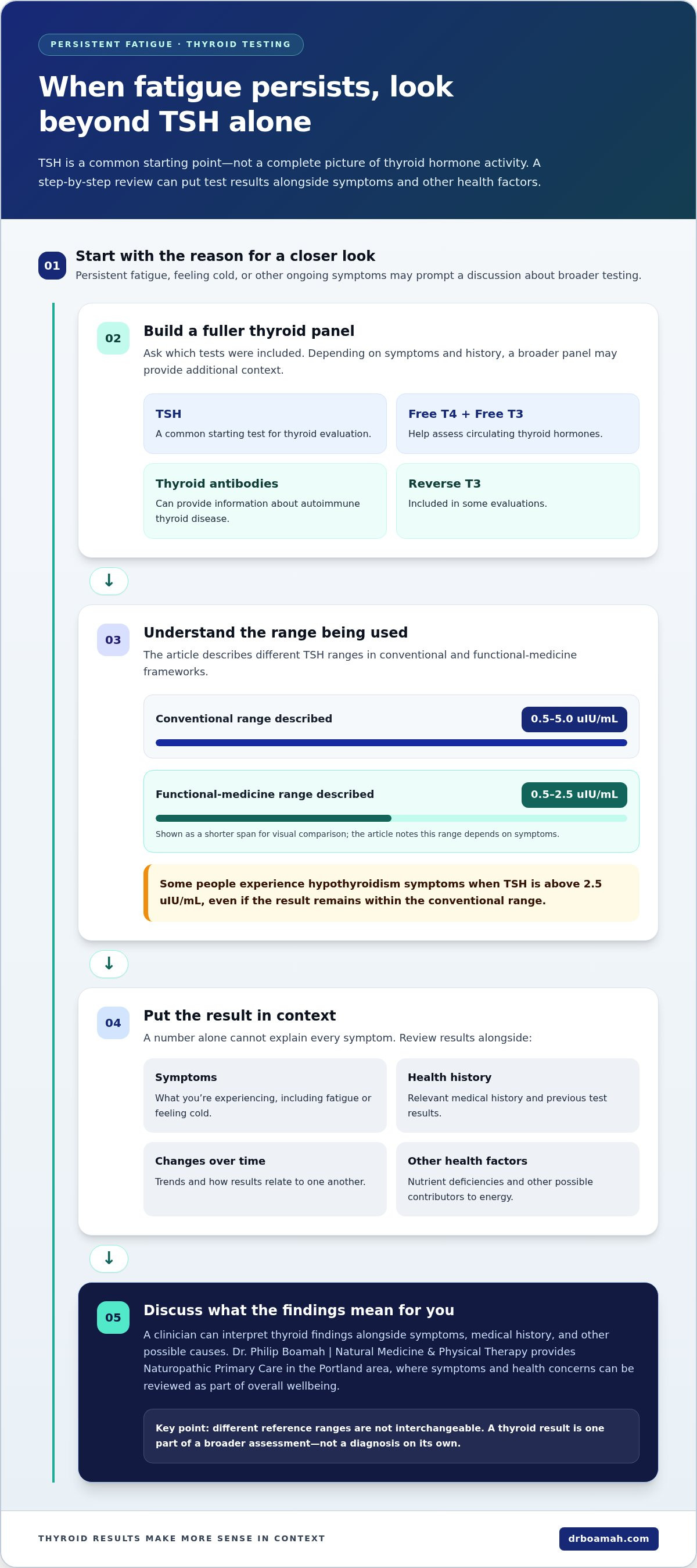
Thyroid testing beyond TSH
TSH is a common starting point, but it doesn’t show every aspect of thyroid hormone activity. Persistent fatigue, feeling cold, or other symptoms may warrant a discussion about broader testing. Results need to be interpreted alongside symptoms, medical history, and other possible causes.
A more complete thyroid panel may include TSH, free T4, free T3, and thyroid antibodies. Free T4 and free T3 help assess circulating thyroid hormones; antibodies can provide information about autoimmune thyroid disease. Some evaluations also include reverse T3. Together, these tests can offer a fuller view of how hormones are made, converted, and used by cells.
Reference ranges and functional medicine targets aren’t identical. The conventional TSH range described here is 0.5-5.0 uIU/mL; the functional-medicine range is 0.5-2.5 uIU/mL, depending on symptoms. Some people experience hypothyroidism symptoms when TSH rises above 2.5 uIU/mL, even if the result remains within the conventional range. That difference is a reason to discuss the result in context, not diagnose thyroid disease from a number alone.
Ask which tests were included and whether your symptoms support additional thyroid testing. Share relevant history and prior results, then discuss whether thyroid antibodies or free hormone levels could add useful context. Nutrient deficiencies and other health factors may also affect energy, so a thyroid result is one part of a broader assessment. A clinician can help interpret test findings in the context of your overall health.
Normal lab ranges versus optimal health
Conventional reference ranges typically include about 95% of the population. They help flag results outside a laboratory’s expected range, but a value inside that range doesn’t explain every symptom. A personalized review considers symptoms, health history, changes over time, and how results relate to one another.
Fasting glucose shows why context matters. A level of 99 mg/dL is considered normal by most labs, while the National Institute of Diabetes and Digestive and Kidney Diseases gives 100-125 mg/dL as the prediabetes fasting-glucose range. That distinction can guide follow-up, but one result still needs interpretation alongside the person’s health picture.
Vitamin D provides another example of differing frameworks: the conventional range described here is 30-100 ng/mL, while the functional range is 50-80 ng/mL. The functional vitamin B12 range described is 500-900 pg/mL. These ranges aren’t interchangeable. Ask which reference range was used and how your symptoms inform its meaning.
Ferritin measures iron stores. Most labs flag levels around 12-15 ng/mL as abnormal, while functional medicine may pay attention below 50 ng/mL when fatigue is present. Levels of 30-50 ng/mL are associated with fatigue in some people, including without anemia. Inflammation, cortisol patterns, and immune function can also add context beyond a single marker. For a deeper, personalized review, discuss your lab results and fatigue with a healthcare professional.
Dr. Philip Boamah | Natural Medicine & Physical Therapy: Naturopathic Primary Care
Dr. Philip Boamah | Natural Medicine & Physical Therapy provides Naturopathic Primary Care in the Portland area for people seeking a thoughtful next step after unexplained fatigue and normal test results. A visit offers an opportunity to discuss symptoms, review health concerns, and consider your overall wellbeing.
If fatigue affects movement or daily activity, Physical Therapy may be relevant; care can also include Class 4 Laser Therapy or PEMF Therapy where appropriate. These services have different purposes, so the focus is choosing an approach connected to your needs, rather than assuming one treatment addresses every cause of fatigue.
Bring your lab results and notes about energy, sleep, and symptoms to support a focused conversation. Contact Dr. Philip Boamah | Natural Medicine & Physical Therapy to explore Naturopathic Primary Care as a next step.
Take a thoughtful next step
Persistent fatigue can affect work, movement, and everyday routines. Bring your questions and lab records to a care conversation focused on how your symptoms affect daily life.
If you're tired of being told that your labs are normal, you can still ask for care that considers your experience alongside test results. Dr. Philip Boamah | Natural Medicine & Physical Therapy offers Naturopathic Primary Care, Physical Therapy, and Class 4 Laser Therapy as part of its services.
To discuss your next step, contact Dr. Philip Boamah | Natural Medicine & Physical Therapy or call 541-390-1677. Your ongoing symptoms deserve a considered conversation, and taking that step can help you move forward with greater clarity.
Frequently Asked Questions
Why am I so tired all the time when my labs are normal?
Fatigue may persist when routine bloodwork doesn’t assess factors such as sleep quality, medication effects, stress, or symptoms after an illness. Note when your energy drops, whether sleep feels restorative, and what else changes, such as concentration or mood. This pattern can help a Portland healthcare professional decide what deserves closer attention.
How long does it take to feel better?
Some people notice meaningful improvement within a few weeks to a few months. The timeline depends on what’s contributing to fatigue and whether the care plan addresses it. Track practical measures such as morning energy, concentration, and ability to complete daily activities. Sharing those changes at follow-up can help show whether your plan is making a difference.
Can you be exhausted all the time and still have “normal” blood work?
Bloodwork measures particular markers at a particular time; it doesn’t capture every influence on energy or daily function. For example, results won’t show whether you wake repeatedly at night or feel mentally drained after ordinary tasks. Persistent exhaustion is useful health information, even when standard results haven’t identified a cause.
So… Why Don’t Doctors Flag This Stuff?
Routine testing often looks for signs of specific diseases, and a result is flagged when it falls outside that test’s reference range. Those ranges typically include about 95% of the population, so being inside one doesn’t explain every symptom. Clinicians also interpret results using your history, symptoms, and the reason the test was ordered.
What deficiencies most commonly cause fatigue?
Low iron stores, vitamin D, vitamin B12, folate, and magnesium can contribute to fatigue. Ferritin reflects stored iron, while B12 and folate support nerve and brain function. A clinician can connect test findings with symptoms and factors affecting nutrient intake or absorption, rather than assuming a deficiency from tiredness alone. This information is educational and doesn’t replace professional medical advice, diagnosis, or treatment.


