
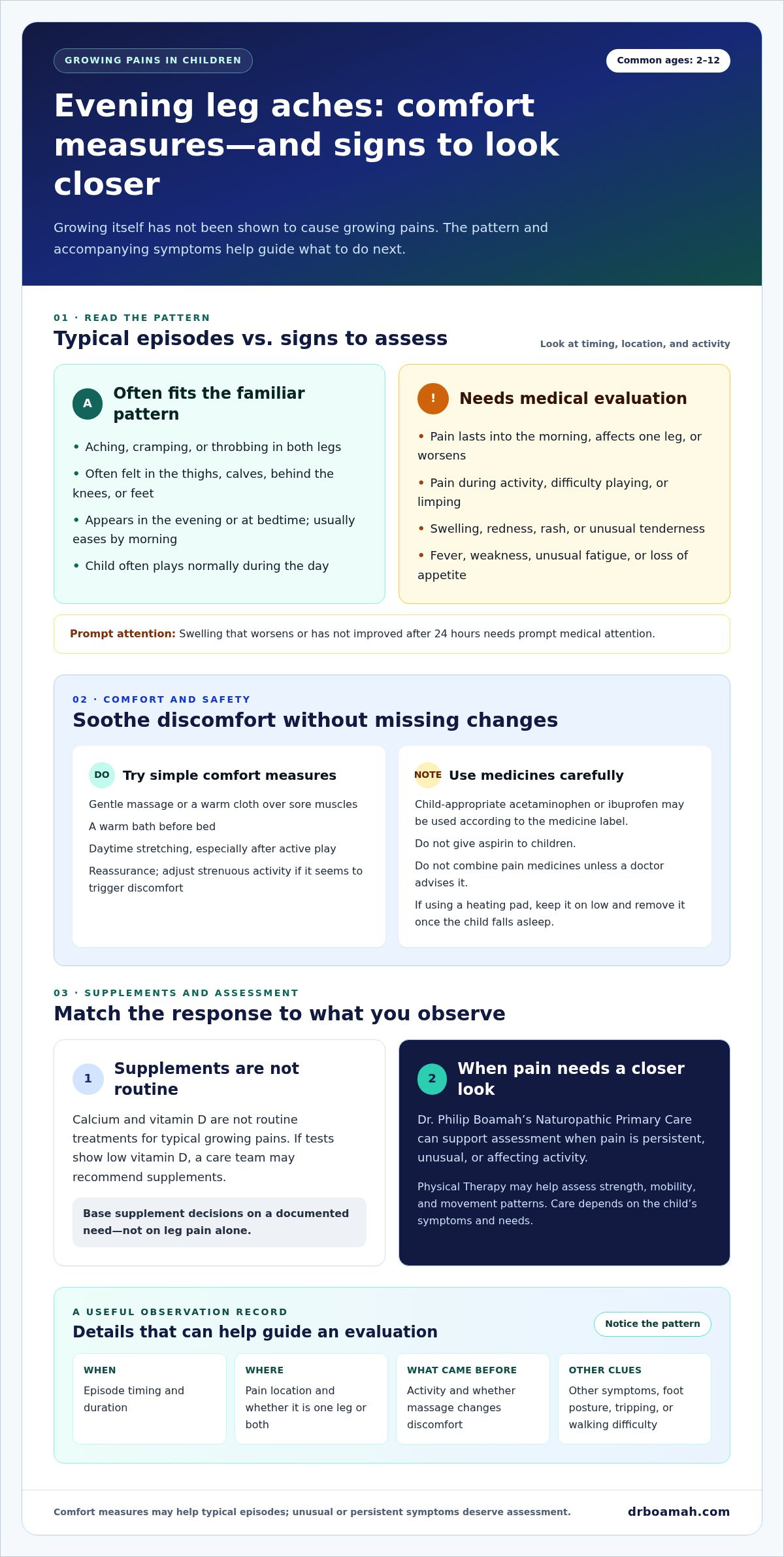
Growing itself hasn’t been shown to cause growing pains. They usually bring an ache or cramp in both legs in the evening or at bedtime, then ease by morning. For many children, growing pains treatment for kids starts with gentle massage, warmth, reassurance, and daytime stretching; pain that persists, affects one leg, or limits activity deserves medical evaluation.
Parents can feel uneasy when leg pain wakes a child, especially if it returns after an active day. Simple comfort measures may ease typical episodes, while noticing the pattern can help distinguish them from symptoms that need attention. This guide explains what may contribute to growing pains, which warning signs to take seriously, and practical ways to soothe discomfort, so you can support your child and know when to seek an assessment.
Key Takeaways
- For pain relief, caregivers may consider child-appropriate acetaminophen or ibuprofen and follow the medicine label; aspirin should not be given to children.
- Daytime pain, limping, worsening symptoms, or swelling, fever, weakness, or unusual tenderness are reasons to seek medical evaluation.
- Gentle massage, a warm bath, and stretching may help soothe discomfort; use a heating pad on low and remove it once your child falls asleep.
- When leg pain needs a closer look, Dr. Philip Boamah’s Naturopathic Primary Care and Physical Therapy can support assessment and care tailored to your child.
What causes growing pains?
Growing pains commonly affect children ages 2-12, but growth itself hasn’t been shown to cause them. The familiar name can mislead: these symptoms don’t mean a child’s bones are growing painfully or abnormally. Discomfort often appears in the late afternoon, evening, or at bedtime, sometimes waking children overnight. It usually goes away by morning, and children often play normally during the day.
The exact cause of growing pains remains unclear. Episodes may follow a particularly active day, possibly because muscles have been overused. A child’s pain threshold can affect how strongly discomfort is felt, but pain alone doesn’t identify a specific cause. A child’s leg or foot appearance doesn’t confirm growing pains either. Foot concerns or very flexible joints may be relevant during an assessment, especially if symptoms affect movement.
Typical discomfort feels like an ache, cramp, or throbbing in both legs. Children often point to the front of their thighs, calves, or the areas behind their knees; some feel pain in their feet. Growing pains usually affect both sides, rather than one specific joint. A warm bath may soothe sore muscles, but it doesn’t explain the cause of the pain.
For relief, caregivers may use children’s acetaminophen or ibuprofen, following the medicine label’s dosing instructions. Don’t give aspirin to a child: its use is linked to the rare but serious Reye’s disease. Don’t combine pain medicines unless a doctor advises it. If pain persists into the morning, stays in one leg, or disrupts normal activities, arrange a medical evaluation instead of assuming it’s ordinary growing pains.
Symptoms that may require medical evaluation
Growing pains are less likely when leg pain lasts into the morning, affects only one leg, or worsens over time. Pain during physical activity or difficulty joining normal play also deserves attention. A child who looks unwell, limps, or has a tender spot that hurts when touched should be assessed rather than assumed to have a benign syndrome. These patterns may indicate causes other than growing pains.
Contact a doctor if leg pain comes with symptoms such as:
- Swelling, redness, tenderness, or a rash around the painful area.
- Fever, weakness, unusual fatigue, or loss of appetite.
- Pain that interferes with activity or continues during the day.
Swelling that worsens or hasn’t improved after 24 hours needs prompt medical attention. A clinician may ask when the pain began, which muscles or calves hurt, and whether symptoms follow activity. They may examine the bones and muscles for tenderness. Tests usually aren’t needed for typical growing pains, though blood tests or imaging can help rule out other causes.
Before an appointment, note when episodes occur, where the pain starts, how long it lasts, and what activity came before it. Record other symptoms, including headaches, and whether gentle massage changes the discomfort. Mention foot posture, frequent tripping, or difficulty walking; these details can help guide an evaluation. Physical Therapy may be considered when movement patterns or flexible joints contribute to a child’s concerns, helping assess strength and function.
Treatments for growing pains
There’s no specific treatment that prevents growing-pain episodes, but practical comfort measures may ease a child’s evening discomfort. A useful growing pains treatment for kids focuses on soothing symptoms while watching for changes that warrant an assessment.
Treatment Approaches
Care usually aims to ease discomfort, not treat growth itself. Try gentle massage, a warm bath before bed, or a warm cloth over sore muscles. Daytime stretching may help reduce nighttime episodes, particularly after active play. If you use a heating pad, keep it on low and remove it once your child falls asleep.
For pain relief, acetaminophen or ibuprofen may be used according to the medicine label. Don’t give aspirin to children, and don’t combine pain medicines unless a doctor advises it. Reassure your child and adjust strenuous activity if it seems to trigger discomfort. This growing pains treatment for kids approach supports comfort without overlooking symptoms such as daytime pain or swelling, which need medical attention.
Evidence for Vitamin D and Calcium
Vitamin D and calcium supplements aren’t a routine treatment for typical growing pains. If tests show low vitamin D, a care team may recommend calcium and vitamin D supplements. That’s different from assuming every child with leg pain needs supplements.
Discuss testing with your child’s doctor if symptoms or health history raise concerns about low vitamin D. Test results can help determine whether supplements are appropriate. They won’t address other causes of leg discomfort, so persistent or unusual pain still needs assessment. The practical takeaway is to use comfort measures for ordinary episodes and base supplement decisions on a documented need.
Dr. Philip Boamah | Natural Medicine & Physical Therapy: Naturopathic Primary Care
Dr. Philip Boamah | Natural Medicine & Physical Therapy offers Naturopathic Primary Care as a next step when a child’s leg pain is persistent, unusual, or affecting activity. An assessment can help clarify symptoms and whether additional care is appropriate, rather than assuming every ache is a growing pain.
For concerns involving movement or muscle function, Physical Therapy may support a closer look at strength and mobility. The practice also offers Class 4 Laser Therapy and PEMF Therapy as part of its approach to pain management. Care depends on the child’s symptoms and needs, with the aim of helping families understand practical options.
To discuss your child’s leg pain or book a visit, call 541-390-1677.
Take the Next Step Toward Comfortable Days
A thoughtful plan for growing pains treatment for kids should help your family respond to discomfort while staying alert to changes in your child’s daily movement. Notice what seems to trigger pain and how it affects play, sleep, or activity; these observations can make a conversation with a healthcare professional more useful.
If you’d like support thinking through your child’s symptoms and possible next steps, connect with Dr. Philip Boamah | Natural Medicine & Physical Therapy. Call 541-390-1677 to book a visit, or contact Dr. Boamah online. A clear plan can help your family feel more prepared and your child move forward with confidence.
Frequently Asked Questions
What are the symptoms?
Children may describe leg discomfort as aching, cramping, or throbbing, and episodes can vary from evening to evening. Some have pain-free days between episodes. Notice whether your child wakes during the night, how they describe the sensation, and whether they’re comfortable with usual activities afterward. These details can help clarify the pattern.
When should I see my healthcare provider?
Arrange an evaluation if your child’s pain is unusual, persistent, worsening, or accompanied by swelling, fever, weakness, or limping. Swelling that worsens or hasn’t improved after 24 hours needs prompt attention. Before the visit, write down when symptoms began, what activities preceded them, and whether anything else changed, such as appetite, energy, or walking.
What are growing pains in children, and what are the symptoms?
Growing pains are recurring leg aches in children, but growth itself hasn’t been shown to cause them. They’re typically felt in both legs and often occur in the evening or at bedtime. A child may describe a cramp or dull ache, then feel well by morning. Persistent or unusual pain needs assessment.
How can parents relieve growing pains at home?
Offer comfort during an episode with a gentle leg rub, cuddles, or a warm bath before bed. If your child is already in pain, acetaminophen or ibuprofen may be used according to the label. Don’t give medicine preemptively before bedtime, and don’t give aspirin to children. Track recurring episodes and changes in daytime movement.
Does massage, stretching, heat, or ice help growing pains in kids?
Gentle massage, daytime stretching, and warmth may ease discomfort; a warm cloth or bath can be soothing. If using a hot water bottle, wrap it in cloth rather than placing it directly against the skin. Website information is for educational purposes only and isn’t a substitute for professional medical advice, diagnosis, or treatment.
For help planning your child’s next step, call 541-390-1677 to book a visit with Dr. Philip Boamah | Natural Medicine & Physical Therapy.


