
Persistent fatigue or other unexplained changes can raise questions about whether your diet is meeting your nutritional needs, but they don’t point to a specific deficiency on their own. If you’re considering supplements based on my DNA, genetic results may offer clues, but they can’t confirm that a particular supplement is right for you.
Dr. Philip Boamah, a naturopathic doctor in Hillsboro serving the Portland area, offers Nutrigenomix genetic testing alongside naturopathic primary care. He can help you consider nutrition-related genetic information in the context of your health history, diet, current supplements, and medications. This article explains what DNA-based guidance can and can’t tell you, what to weigh when reviewing recommendations, and how to discuss a safe, individualized next step with a qualified clinician.
Key Takeaways
- Start with the nutrition question you want to answer before exploring supplements based on my DNA.
- Check what a genetic test covers, then consider its findings alongside your diet, health history, medications, and symptoms.
- Dr. Boamah offers Nutrigenomix genetic testing and naturopathic primary care to help put nutrition-related results in personal context.
- Discuss supplement questions with a qualified clinician, and call 541-390-1677 to book an appointment with Dr. Boamah.
When nutrient concerns lead you to consider supplements based on your DNA
It can be frustrating to wonder whether your diet is meeting your nutrient needs, especially when online advice points in different directions. Fatigue or other changes may prompt nutrition questions, but symptoms alone don’t identify a deficiency or show that a supplement is needed. Your diet, health history, medications, and an appropriate clinical assessment all help shape the picture.
What can genetic testing tell you about nutrition?
Genetic testing may provide information about inherited variations that could be relevant to nutrition. The science of nutritional genomics explores how genes and diet relate, but a genetic tendency isn’t the same as a confirmed nutrient deficiency, a diagnosis, or a guaranteed health outcome.
DNA-informed supplement guidance uses genetic information as one possible input when considering nutrition, not as a stand-alone prescription for a particular supplement. The test’s scope matters. Nutrigenomix is offered through Dr. Boamah’s practice, but ask which nutrition-related traits the current report covers and how those findings might relate to your question. Don’t assume that a result means you need a specific nutrient.
Consider genetic information alongside what you eat, your symptoms, medical history, medications, and relevant clinical information. A result may raise a question worth discussing, while your overall circumstances help determine whether follow-up is appropriate. This broader perspective can help you assess supplements based on my DNA without treating a test result as the whole answer. Dr. Philip Boamah offers naturopathic primary care and Nutrigenomix testing in Hillsboro, serving the Portland area. The following sections explain how to evaluate recommendations and discuss your options with a clinician.
How to evaluate supplements based on your DNA before choosing them
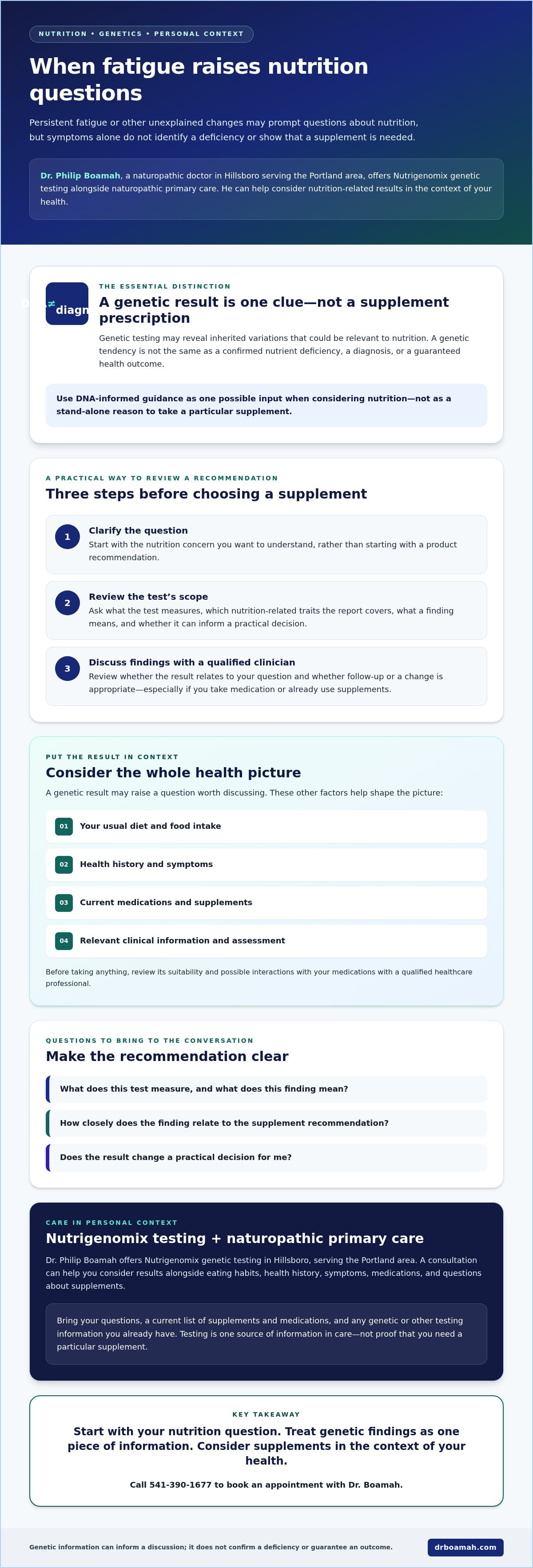
A genetic result can raise a useful question, but it doesn’t automatically show that you need a supplement. Before acting on a recommendation, work through these steps:
- Clarify the question. Identify the nutrition concern you want to understand instead of starting with a product recommendation.
- Review the test scope. Ask what the test measures, what the result means, and whether it can inform a practical decision.
- Discuss the findings. Consider them with a qualified clinician before adding a supplement, especially if you take medication or already use other supplements.
Then compare the genetic information with the rest of your health picture: your usual diet, medical history, symptoms, current medications, and any relevant clinical information. For example, a test result may point to an area to explore, but your food intake and health context help determine whether further assessment or a change is appropriate. Harvard’s discussion of precision nutrition also highlights the importance of translating personal information into a practical approach, rather than assuming a genetic result alone identifies an effective eating plan to prevent or treat disease.
Questions to ask before acting on a DNA-based recommendation
Ask what the test measures, how closely the finding relates to the recommendation, and whether the result changes a real decision for you. Before taking anything, review its suitability and possible interactions with your medications with a qualified healthcare professional.
Use genetic findings alongside your diet, health history, symptoms, medications, and relevant clinical information before deciding whether a supplement makes sense. If you’re weighing supplements based on my DNA, consider discussing your questions with Dr. Boamah as part of naturopathic primary care.
How Dr. Boamah can help you consider DNA-based supplement guidance
Once you have a nutrition question or genetic result to make sense of, a clinician can help put it in context. Dr. Philip Boamah is a naturopathic doctor in Hillsboro serving the Portland area. His practice combines naturopathic primary care with Nutrigenomix genetic testing for personalized nutrition. Testing can be one source of information in care, not proof that you need a particular supplement.
A consultation can help you consider what your results may mean alongside your eating habits, health history, symptoms, and medications. The scientific evidence for DNA-based nutrition offers useful background, while an individual discussion can help connect general research to the questions you want answered. It doesn’t guarantee a supplement recommendation. Instead, it gives you a chance to review the information thoughtfully and consider appropriate next steps.
What to discuss at a Portland-area nutrition consultation
Bring the questions that prompted your interest in supplements based on my DNA, a current list of supplements and medications, and any genetic or other testing information you already have. These details can help keep the discussion focused on your circumstances.
If you’d like an overview before your visit, look for the practice’s guides titled “Is Nutrigenomix Testing Worth It?” and “What to Expect from a Naturopathic Doctor.” They can help you prepare questions about testing and the appointment. The goal is a clearer understanding of what your information may contribute, not a one-size-fits-all answer.
To discuss your nutrition questions and Nutrigenomix testing with Dr. Boamah, call 541-390-1677 to book an appointment.
Take a confident next step with your nutrition questions
DNA results can offer clues, but they don’t confirm a deficiency or prove that a particular supplement is right for you. Before choosing supplements based on my DNA, check what the test covers and discuss its findings alongside your diet, health history, symptoms, and medications. That broader view can help you make a more thoughtful decision.
Dr. Boamah provides naturopathic primary care in the Portland area and offers Nutrigenomix genetic testing. A conversation can help you consider whether testing and your nutrition questions belong in the same care discussion, without assuming a genetic result requires a supplement.
Ready to explore your options? Call 541-390-1677 to schedule an appointment with Dr. Boamah. Bring your questions and any relevant testing information to discuss your next steps.
Frequently Asked Questions
Can a DNA test tell me which supplements to take?
No. A genetic test may provide nutrition-related information, but it doesn’t automatically identify a supplement you need or establish a nutrient deficiency. Recommendations about supplements based on my DNA should be considered alongside your diet, health history, symptoms, medications, and appropriate clinical assessment. Before starting or changing a supplement, review your results with a qualified clinician who can help interpret them in your personal context.
Are supplements based on my DNA more effective than regular supplements?
Not necessarily. DNA-based recommendations aren’t universally more effective. Their usefulness depends on what the test measures, what a finding means, and your individual circumstances. Genetic information may help inform a nutrition question, but it may not change what you should do. A clinician can compare the result with your diet, health history, medications, and other relevant information before you decide whether it supports a practical next step.
Should I stop taking my current supplements after genetic testing?
Don’t stop or change your supplements solely because of a genetic report. What’s appropriate may depend on your health history, the products you take, your medications, and how the findings are interpreted. Make a list of your current supplements and share it, along with your test results, with a qualified healthcare professional. This is especially important if you take medication or are managing a health condition.
How can I discuss DNA-based supplement recommendations with a naturopathic doctor in Portland?
Bring your genetic report if you have one, a list of your supplements and medications, and the nutrition question you want to explore. Dr. Boamah’s Portland-area practice offers Nutrigenomix genetic testing and naturopathic primary care, so you can discuss testing and your broader health context together. To book an appointment, call 541-390-1677.


