
Surgery is only one part of recovery. Rebuilding comfortable movement and strength takes a plan suited to the procedure. Post-surgical rehabilitation in Portland, OR, often includes physical therapy and exercises to restore muscle strength, joint motion, and everyday function. The right approach depends on the surgery, whether it involved nerve release, compression relief, or an orthopedic procedure such as joint replacement.
It’s understandable to wonder what therapy will involve and how much activity is appropriate as you heal. A focused rehabilitation plan can help you work toward steady progress while accounting for your movement, strength, balance, and recovery goals.
Here’s what post-surgical care may include, how rehabilitation differs by procedure, and what factors shape the plan, so you can understand the next steps in recovery.
Key Takeaways
- Recovery after nerve release or compression surgery varies with the procedure and how consistently you follow your therapy plan.
- Rehabilitation after orthopedic, foot, ankle, or joint surgery is tailored to the operation and the movement or strength you’re rebuilding.
- After joint replacement, therapy can focus on joint motion, surrounding muscle strength, balance, and exercises to continue at home.
- Dr. Philip Boamah | Natural Medicine & Physical Therapy offers Physical Therapy alongside Class 4 Laser Therapy and PEMF Therapy to support care goals.
Nerve release and compression surgery recovery
After nerve release or compression surgery, rehabilitation can help restore movement and everyday function. Recovery varies by procedure, and following therapy instructions helps guide the process. To arrange care, follow your surgeon’s post-operative instructions, request a physical therapy evaluation, and share details of the operation and your current limitations.
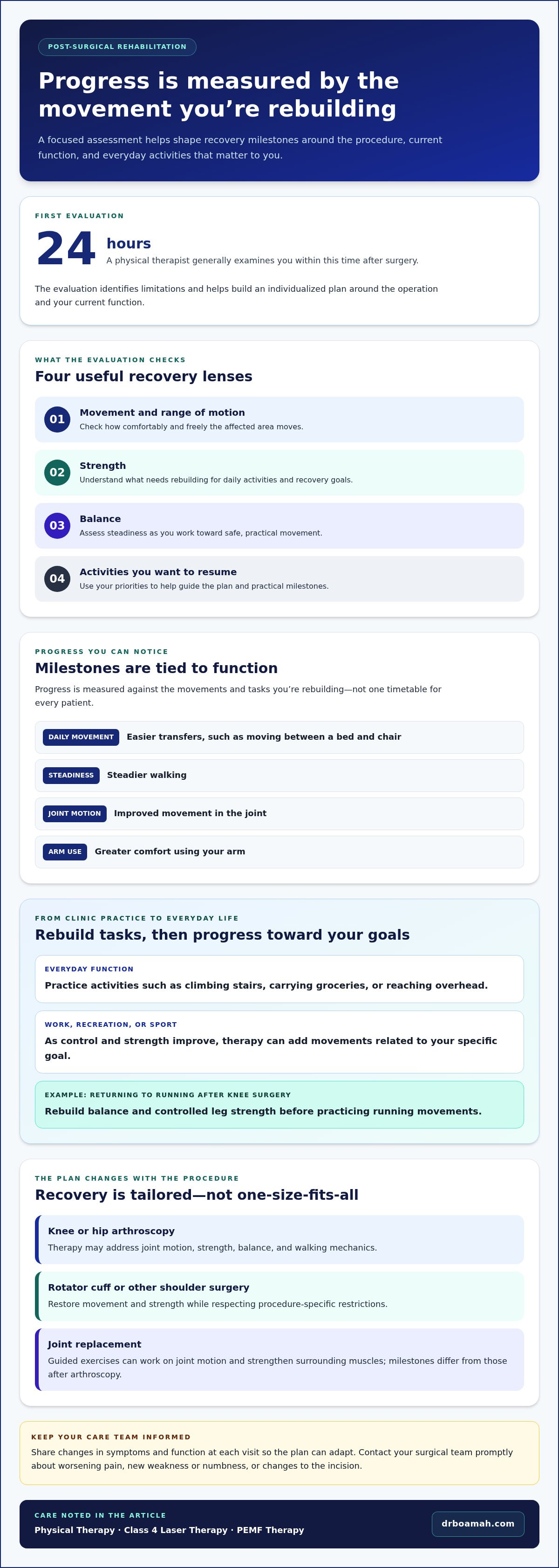
Expect an assessment of movement, strength, balance, and the activities you want to resume. Your plan can then build toward practical milestones, from comfortable daily movement to returning to work or sport.
Knee, Hip, and Shoulder Recovery
After arthroscopic knee or hip surgery, therapy may address joint motion, strength, balance, and walking mechanics. The specific operation and injury guide which movements need attention and how exercises progress.
Recovery after rotator cuff or other shoulder surgery focuses on restoring movement and strength while respecting the procedure’s restrictions. Track changes in reaching, dressing, and other everyday tasks, and follow your surgeon’s instructions before increasing activity. Joint replacement follows its own plan, with milestones different from those after arthroscopy.
Assessment and Recovery Milestones
A physical therapist generally examines movement, range of motion, strength, and balance within 24 hours of surgery. The assessment identifies limitations and helps shape an individualized plan around the procedure and your current function.
Milestones may include easier transfers, steadier walking, improved joint motion, or greater comfort using your arm. Progress is measured against the movements and tasks you’re rebuilding, not a single timetable for every patient. Share changes in symptoms and function at each visit so your plan can adapt to your recovery.
Functional and Sport-Specific Progress
Functional rehabilitation connects clinic exercises with everyday tasks, such as climbing stairs, carrying groceries, or reaching overhead. As control and strength improve, therapy can add movements related to work, recreation, or a sport-specific goal.
For example, a runner returning after knee surgery may need to rebuild balance and controlled leg strength before practicing running movements. For follow-up, bring your surgery information, current instructions, and priority activities to the evaluation. Practicing between visits helps your therapist assess how those activities are returning.
What is post-surgical rehabilitation?
Post-surgical rehabilitation uses guided movement and physical therapy to rebuild mobility after an operation. After orthopedic, foot, ankle, or joint procedures, treatment may address motion, strength, balance, and daily tasks such as walking or using stairs.
Acute care rehabilitation begins in the hospital after surgery or injury. Patients practice safe movement, such as transferring from bed to chair, before planning the next stage. After discharge, care may continue at home or in an outpatient clinic, depending on the patient’s needs and care plan.
For neck or back surgery, therapists follow procedure-specific instructions while helping patients practice safe movement. Common concerns include pain during activity, stiffness, reduced walking tolerance, or difficulty dressing. Report changes in symptoms and function during treatment.
To compare providers for post-surgical rehabilitation in Portland, OR, consider their specialty, location, patient ratings, and appointment availability. Also weigh practical factors, such as transportation and whether appointment times fit your schedule.
Insurance, Medicare, or Medicaid coverage and out-of-pocket responsibility depend on plan benefits and requirements. Review outpatient coverage, network rules, referral or authorization requirements, and cost-sharing terms. There’s no single typical therapy cost; the fee depends on the case and is provided after a quote request, with treatment needs and the care plan shaping the cost.
Contact your surgical team promptly about worsening pain, new weakness or numbness, or changes to the incision. Home rehabilitation may suit patients whose mobility makes clinic visits difficult; eligibility depends on individual care circumstances. For post-surgical rehabilitation in Portland, OR, physical therapy can support your movement goals.
Orthopedic rehabilitation, including joint replacement
In Portland, look for orthopedic rehabilitation aligned with your specific procedure, from joint replacement to spine surgery. A physical therapy evaluation should assess mobility, strength, and balance, then shape treatment around surgical instructions and the movements you need to regain.
Joint Replacement Recovery
After total joint replacement, rehabilitation uses guided exercises to restore joint motion and strengthen surrounding muscles. It can also help prevent scar tissue from forming after surgery. The process depends on the injury and type of procedure, so consider whether therapy addresses your specific joint and daily activities. A Portland clinic physical therapist generally examines movement, range of motion, strength, and balance within 24 hours of surgery. Those findings help establish useful recovery milestones.
Joint Mobility and Strengthening
Rebuilding movement takes more than working the replaced joint. Exercises may strengthen nearby muscles and improve balance, helping you practice activities such as standing, walking, and using stairs. Rehabilitation can increase blood flow, reduce post-surgery discomfort, and help protect against additional harm. Follow the exercise plan and adjust activity according to the surgical instructions; the operation and healing process shape progression. Post-surgery physical therapy may last from a month to a year, depending on surgical technique. Track changes in motion and function to see how your recovery is progressing.
For a movement-focused plan after an orthopedic procedure, explore sports injury rehabilitation and discuss the activities you’re working to regain.
Dr. Philip Boamah | Natural Medicine & Physical Therapy: Naturopathic Primary Care
Dr. Philip Boamah | Natural Medicine & Physical Therapy offers outpatient Physical Therapy as a next step when you need guided movement after surgery. Treatment can focus on the strength, mobility, and daily activities you’re working to regain, with a plan shaped around your procedure and recovery goals.
Naturopathic Primary Care supports a broader view of your health, while Class 4 Laser Therapy and PEMF Therapy are available as part of the practice’s approach to pain management. These services complement, rather than replace, your surgeon’s post-operative instructions. Bring those instructions and describe the movements that remain difficult so your recovery needs can guide the conversation.
If you’re considering post-surgical support, call 541-390-1677 to schedule a visit with Dr. Philip Boamah | Natural Medicine & Physical Therapy.
Make your next recovery step purposeful
Recovery is also a chance to define what progress means for you: getting back to work, moving comfortably around Portland, or returning to a favorite outdoor routine. Bring that goal, your post-operative instructions, and questions about current limitations to a conversation about appropriate support. A clear next step can connect clinical guidance with the movement you want to rebuild.
Before your visit, note which tasks feel harder, what has changed since surgery, and what you hope to resume. Those details can help focus the discussion. For post-surgical rehabilitation in Portland, OR, Dr. Philip Boamah | Natural Medicine & Physical Therapy can discuss how care may align with your recovery goals and existing medical plan. Call 541-390-1677 to book your visit, or contact Dr. Philip Boamah | Natural Medicine & Physical Therapy. Your recovery is personal, and steady progress can help you move toward the activities that matter to you.
Frequently Asked Questions
What post-surgical rehabilitation services are available in Portland, Oregon?
Portland options include outpatient physical therapy and integrative services such as those offered by Dr. Philip Boamah | Natural Medicine & Physical Therapy: Naturopathic Primary Care, Physical Therapy, Class 4 Laser Therapy, and PEMF Therapy. Discuss the procedure and recovery goals to understand which care fits your needs. The website’s information is for educational purposes and isn’t a substitute for professional medical advice, diagnosis, or treatment.
How do I choose between inpatient rehabilitation, a skilled nursing facility, and outpatient physical therapy after surgery?
Start with your discharge plan and the type of support you need day to day. Inpatient rehabilitation and skilled nursing involve facility-based care, while outpatient physical therapy means attending scheduled therapy visits. Consider your mobility, need for assistance, transportation, and ability to manage at home. Dr. Boamah’s practice offers outpatient Physical Therapy, not inpatient hospitalization or skilled nursing care.
How soon after surgery should rehabilitation begin, and how long does recovery therapy usually last?
Follow your surgeon’s post-operative instructions to determine when to begin. A physical therapist at the Portland clinic generally examines movement, range of motion, strength, and balance within 24 hours of surgery. Post-surgery physical therapy may last from a month to a year, depending on surgical technique. Your procedure and progress shape the plan; follow the care team’s guidance as activity advances.


