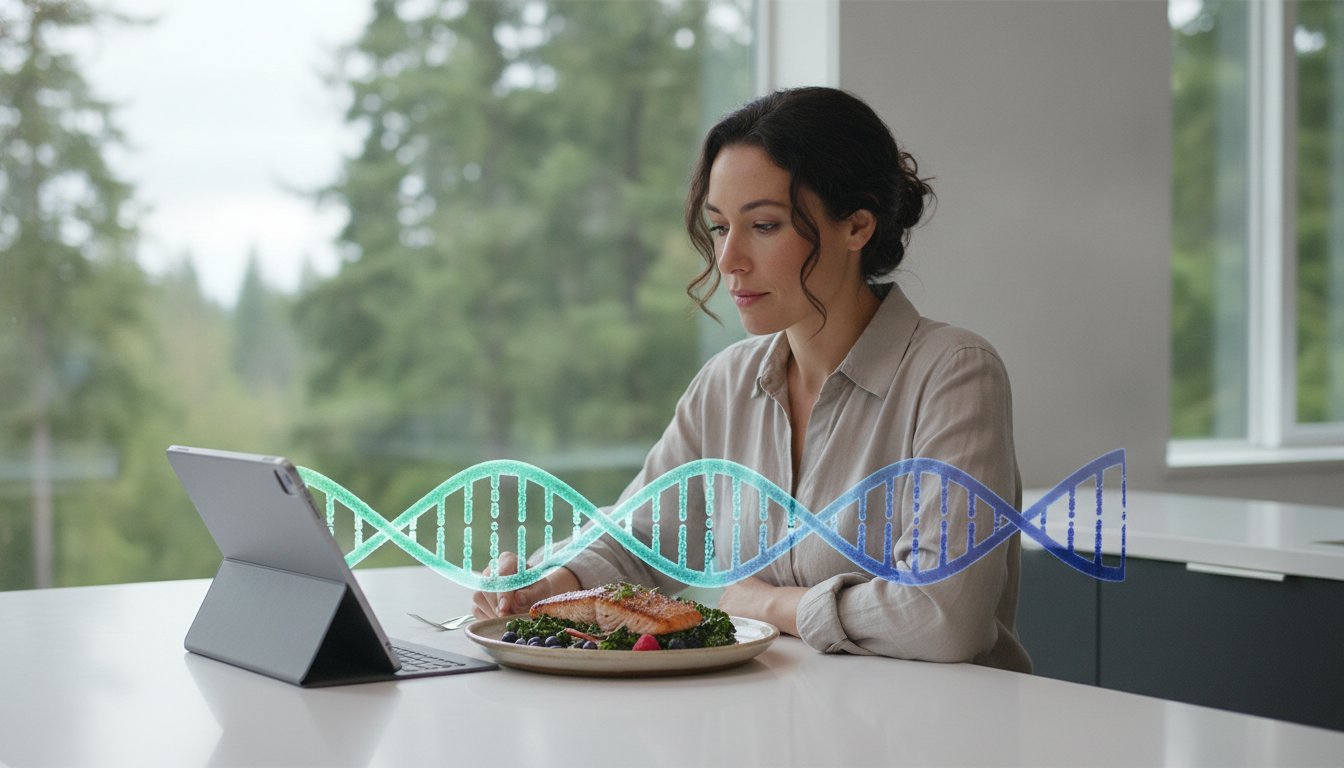
What if the reason your "healthy" diet leaves you feeling fatigued isn't a lack of discipline, but a direct conflict with your unique genetic blueprint? Many of our neighbors struggle with unexplained inflammation or brain fog despite following the latest keto or vegan trends. It's incredibly common to feel overwhelmed by a seventy-page report and wonder exactly what to eat after genetic testing for nutrition to see real results. You've done the hard work of gathering the data, yet the bridge between a lab result and a Tuesday night dinner remains frustratingly unclear.
I promise that your DNA results don't have to stay trapped in a PDF. You can learn how to translate complex biological markers into a practical, localized meal plan that honors your body's specific needs and our region's seasonal bounty. In this guide, we'll explore how to move past the confusion of conflicting diet advice and build a roadmap for vitality. By partnering with Dr. Boamah, you can stop guessing and start using clinical Nutrigenomix insights to unlock your highest potential. We'll show you how a professional interpretation turns raw data into a clear path for reducing inflammation and reclaiming your energy.
Key Takeaways
- Stop guessing with generic diets that don't work for your biology and start using your DNA to address the root cause of your symptoms.
- Learn how specific genetic variants like AMY1 and MTHFR dictate your body's ideal balance of macronutrients and essential vitamins.
- Discover exactly what to eat after genetic testing for nutrition by translating complex lab data into a practical, localized meal plan.
- See how Dr. Boamah uses clinical expertise to bridge the gap between advanced genetic testing and your daily wellness routine.
- Take a decisive step toward your health goals by calling 541-390-1677 to schedule a personalized Nutrigenomix consultation today.
The Challenge of Genetic Data: Why Your Results Feel Overwhelming
Many residents in our community find themselves stuck in a state of information paralysis after receiving a massive genetic report. You have the data, but you don't have a clear kitchen strategy. This gap often leads to unexplained nutritional deficiencies because a 100-page report can't account for your specific lifestyle or environment. Nutritional genomics is the study of how your genes and nutrients interact, yet without professional filtering, this science remains abstract and difficult to apply.
Personalized nutrition is the 2026 standard for preventive care because it moves beyond one-size-fits-all advice to target the specific biological needs of each individual.
To better understand how your genes influence your diet, watch this helpful video:
Beyond the Algorithm: The Need for Clinical Context
Automated apps are popular, but they lack the nuance of a human clinician. An algorithm can't see the chronic pain in your joints or understand how your current blood biomarkers interact with your genetic predispositions. It's easy to get lost in the "what" and miss the "how." Knowing you have a specific variant is only half the battle; knowing how to adjust your daily meals while considering your lifestyle is where true healing begins. Clinical context ensures that your genetic insights are paired with your real-world health status.
This is where Dr. Boamah provides a vital bridge. He doesn't just hand you a printout; he interprets the data to create a sustainable roadmap for your health. By integrating advanced Nutrigenomix testing with naturopathic primary care, Dr. Boamah ensures your plan is clinically sound and personally achievable. He specializes in helping you figure out exactly what to eat after genetic testing for nutrition so you can finally stop guessing and start thriving.
Ready to turn your DNA data into a clear plan for vitality? Call 541-390-1677 today to schedule your consultation and begin your journey toward optimized health.
Practical Food Choices Based on Common Genetic Markers
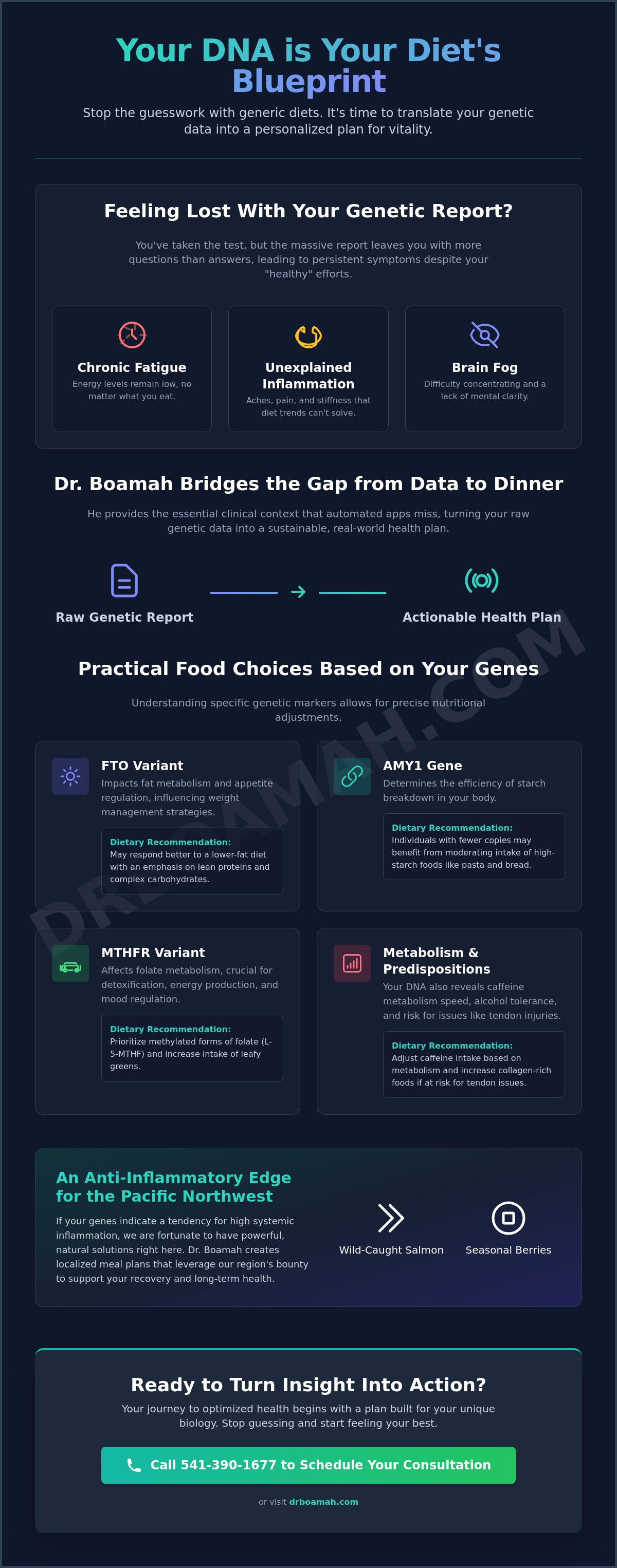
Your DNA offers a specific blueprint for how your body processes the world around you. If you carry the FTO gene variant, your body may respond better to a lower-fat diet to manage weight; meanwhile, the AMY1 gene determines how efficiently you break down starches. Understanding these macronutrient ratios helps you decide exactly what to eat after genetic testing for nutrition so you can stop following generic advice that doesn't work for your biology. Micronutrient bioavailability is another critical factor. For instance, individuals with the MTHFR variant often require methylated forms of folate to support detoxification and energy levels. Transforming DNA Data into a Clinical Health Plan requires looking at these specific markers to avoid the nutritional gaps that lead to chronic fatigue.
Metabolism isn't just about weight; it's about longevity and reproductive health. Your DNA reveals whether you're a fast or slow metabolizer of caffeine and alcohol, which directly impacts your heart health. If your report shows a high risk for tendon issues, prioritizing collagen-rich foods and specific amino acids becomes essential. For those looking to optimize their hormonal balance, you can explore Fertility support to understand how specialized nutritional therapy and detoxification protocols aid reproductive wellness. These biological predispositions often lead to persistent "unexplained symptoms" if they aren't addressed with clinical precision.
Anti-Inflammatory Eating for the Pacific Northwest
In our corner of the Pacific Northwest, we have access to incredible natural anti-inflammatories. If your genetic markers suggest high systemic inflammation, focusing on local, wild-caught salmon and seasonal berries can be life-changing. This is especially important for patients whose chronic inflammation slows down their physical therapy progress. Dr. Boamah specializes in identifying these links, ensuring your diet supports your physical recovery and long-term vitality.
Supplements vs. Whole Foods: The DNA Verdict
While a food-first approach is always the goal, your genes might suggest that diet alone isn't enough to reach optimal levels. You can learn more about choosing supplements based on my DNA to understand when targeted support is necessary. Dr. Boamah acts as your expert guide, helping you navigate these choices so you don't waste money on products your body can't use. If you're ready to move from confusion to a clear roadmap, schedule a comprehensive body analysis to see how your unique biology can thrive. Call 541-390-1677 to book your visit and start your personalized health journey today.
Transforming DNA Data into a Clinical Health Plan with Dr. Boamah
Raw data is just noise without a professional ear to interpret it. Dr. Philip Boamah serves as the expert bridge in our Hillsboro community, integrating Nutrigenomix Genetic Testing with naturopathic primary care. He ensures your results aren't just a list of rules but a living strategy designed for your specific biology. The process is straightforward: a non-invasive cheek swab in our office leads to a meticulously crafted recovery roadmap. Unlike automated apps that lack regional context or stability, Dr. Boamah uses your genetic data to enhance other treatments like PEMF or Class 4 Laser Therapy. This combination of advanced diagnostics and natural medicine supports the active, nature-loving lifestyle we value here in Oregon.
Bridging Naturopathic Care and Physical Therapy
Knowing your genetic predisposition for inflammation fundamentally changes your physical therapy treatment plan. If your code reveals a slower recovery cycle, Dr. Boamah adjusts your therapeutic intensity and frequency to prevent burnout. This integrated approach ensures your body has the raw materials it needs to repair itself. You can read more about what to expect from a naturopathic doctor to see how these insights are applied during your first visit. When your nutrition and your physical movements are in sync, your potential for healing becomes limitless.
Your First Step Toward Personalized Wellness
It's time to transition from the frustration of unexplained symptoms to a data-backed, doctor-guided lifestyle. You don't have to guess about what to eat after genetic testing for nutrition anymore. Dr. Boamah provides the clinical clarity you need to move past generic diet trends and unlock your true biological potential. We're here to act as your dedicated healthcare partner, taking the time to understand every unique factor of your life. Your journey toward optimal health is a partnership built on trust and scientific precision.
Ready to see what your DNA says about your future health? Call 541-390-1677 to schedule your appointment and start eating for your unique biology today.
Claim Your Roadmap to Lasting Vitality
Living with unexplained symptoms or the frustration of conflicting diet trends can feel like an endless cycle of guesswork. You've seen how genetic data provides the blueprint, but clinical expertise is what actually builds the house. By moving from raw data to a sustainable lifestyle, you can finally understand exactly what to eat after genetic testing for nutrition to optimize your unique biology. We've explored how identifying specific markers for inflammation and nutrient metabolism allows you to reclaim your energy and support your body's natural healing processes.
Dr. Philip Boamah is a dual-licensed Naturopathic Doctor and Physical Therapist who specializes in root-cause healing for the Portland community. As a Certified Nutrigenomix Provider, he bridges the gap between advanced science and everyday wellness. You don't have to navigate this journey alone; you have a dedicated healthcare partner ready to help you thrive in our beautiful region. Ready to stop guessing and start healing? Call Dr. Boamah today at 541-390-1677 to schedule your Nutrigenomix consultation and personalized nutrition review. It's time to unlock your highest potential and enjoy the active lifestyle you deserve.
Frequently Asked Questions
How long does it take to see results after changing my diet based on DNA?
You'll typically begin to notice improvements in your energy levels and digestive comfort within three to six weeks of implementing your personalized plan. While these initial shifts are encouraging, more significant biological changes like improved metabolic markers or weight stabilization generally require three to six months of consistency. Your body needs this time to fully recalibrate its cellular processes to the new, optimized nutritional inputs you're providing.
Is Nutrigenomix testing covered by insurance in Oregon?
Most insurance providers in Oregon don't cover the cost of the genetic test kit itself because they often categorize it as a preventive wellness tool. However, your follow-up clinical consultations to discuss what to eat after genetic testing for nutrition may be eligible for coverage under your naturopathic primary care benefits. We recommend contacting your insurance provider or our office to clarify the details of your specific plan.
Can genetic testing help with chronic pain or recovery from injury?
Genetic testing is an invaluable tool for managing chronic pain and accelerating sports injury rehabilitation. Dr. Boamah uses your DNA data to identify specific markers for systemic inflammation and collagen synthesis, which directly impacts how your body repairs connective tissues. By aligning your diet with these genetic predispositions, he can create a recovery roadmap that enhances the effectiveness of your physical therapy and reduces persistent discomfort.
Do I need to redo my genetic testing if my health goals change?
No, you only need to take the test once because your genetic code remains the same throughout your life. What does change is the clinical interpretation of that data as you enter different life stages or face new health challenges. Dr. Boamah can revisit your existing report to provide fresh guidance on what to eat after genetic testing for nutrition so your plan always supports your current lifestyle and wellness objectives.
If you're ready to stop guessing and start using a data-backed strategy for your health, Dr. Boamah is here to guide you. He offers the clinical expertise needed to turn complex genetic reports into a clear, actionable lifestyle plan. Call 541-390-1677 today to schedule your appointment and take the first step toward a more vibrant, personalized future.


