
About 1 in 10 females of reproductive age worldwide are affected by endometriosis. It occurs when tissue very similar to the uterine lining grows outside the uterus, where it can contribute to inflammation, scarring, and pain. For endometriosis pain relief, a naturopath in Portland may consider supportive approaches alongside a person’s broader care.
Painful periods, ongoing pelvic discomfort, and pain during or after intercourse can affect daily life, and it’s understandable to look for options that feel manageable and personal.
This guide explains what endometriosis is and how nutrition, bodywork, acupuncture, and approaches to intimacy may support comfort. You’ll learn what these options can do and how they may fit into a thoughtful pain-management plan.
Key Takeaways
- Endometriosis can affect people in different ways, so understanding how symptoms relate to daily life is a useful starting point.
- Acupuncture, pelvic massage, and castor oil packs are approaches discussed for supporting pelvic circulation and easing discomfort.
- Nutrition choices may support overall well-being; the article explores anti-inflammatory foods and why personal needs matter.
- Thoughtful communication, pacing, and comfortable forms of touch can help make intimacy feel more manageable. Naturopathic Primary Care and Physical Therapy with Dr. Philip Boamah may support a broader pain-care plan.
Castor oil packs, pelvic massage, and acupuncture
Endometriosis affects about 10% of women ages 20 to 50, according to Seven Dragons Integrative Medicine. It develops when tissue similar to the uterine lining grows outside the uterus. Hormonal signals can prompt inflammation and scarring. Symptoms may include pelvic pain, painful periods, constipation, or fertility challenges.
Acupuncture may stimulate the body’s pain-relief response, relax muscles, and ease cramping. It may also support pelvic circulation and help reduce inflammation. Some people use it to address pelvic pain or changes in menstrual cycles. For pelvic floor tension, acupuncture may be paired with pelvic floor therapy, which focuses on muscle coordination and relaxation. A symptom diary can help track changes in pain, bleeding, and daily function across menstrual cycles.
Pelvic massage involves hands-on pressure around the pelvis, while castor oil packs are placed over the abdomen, sometimes with gentle warmth. These approaches may offer comfort, but they do not remove endometriosis growths. Stop any touch or pressure that increases pain, and note whether symptoms change afterward.
Naturopathic care can support symptom management alongside appropriate medical care. Treatment options, which may include hormonal therapy or surgery, depend on symptoms, goals, and clinical findings. A naturopathic approach does not replace evaluation and treatment by a gynecologist.
Insurance coverage in Oregon depends on your policy and the service received. Review your plan’s benefits for naturopathic care, including any visit or treatment limits.
Herbs and supplements can carry risks, including interactions with medicines. Before trying turmeric, ginger, or another supplement, discuss it with a qualified health professional who can consider your medications and health history.
Anti-inflammatory diet and nutrition
Food choices can support overall well-being while addressing digestive symptoms and inflammation. A practical approach focuses on nourishing variety, not a restrictive menu.
Inflammation and Immune Function
Immune function is the body’s system for responding to threats, while inflammation is part of that response. With endometriosis, inflammatory processes can contribute to discomfort, so nutrition that supports gut integrity and immune function may be relevant. Digestive symptoms can accompany the condition, making it useful to notice how meals relate to bloating or other changes. Track those patterns alongside symptoms during periods.
Principles of Anti-Inflammatory Nutrition
Anti-inflammatory nutrition emphasizes varied, nourishing foods rather than a single ingredient or strict diet. Build meals around colorful vegetables, fruit, fiber, and healthy fats, while reducing processed foods and excess sugar if they worsen bloating or discomfort. Adequate vitamin D and zinc also support immune function. Individual food tolerances, digestive health, and daily routines shape which changes feel practical and sustainable.
Anti-Inflammatory Food Choices
Leafy greens, berries and other fruits, olive oil, flaxseed, and omega-3-rich foods such as wild fish are concrete options. Try adding greens and olive oil to a meal, or using flaxseed in breakfast foods. Turmeric and ginger can be included in cooking; consult a professional before using them as supplements. These foods may support general wellness, but they don’t remove endometriosis tissue or guarantee changes to fertility or chronic pelvic pain.
For a plan that connects food choices with hormonal goals, explore hormone-balancing care.
Painful sex, intimacy, and touch challenges
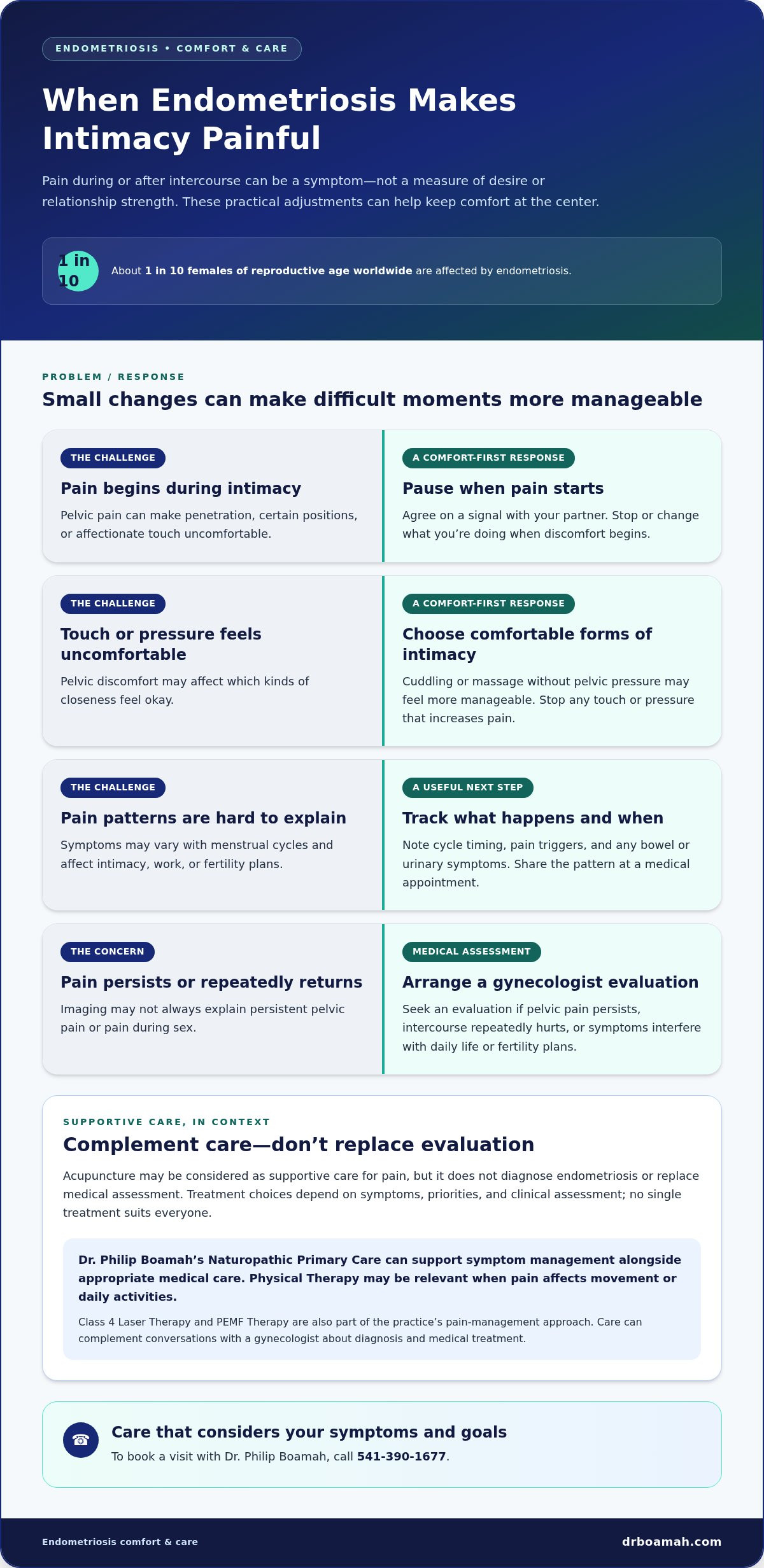
Pain during or after intercourse can be an endometriosis symptom, not a measure of desire or relationship strength. Pelvic pain may make penetration, certain positions, or affectionate touch uncomfortable. Pause when pain begins, agree on a signal with your partner, and choose forms of intimacy that feel comfortable, such as cuddling or massage without pelvic pressure. These adjustments can help protect comfort and quality of life while you seek answers.
Endometriosis tissue can grow on pelvic structures, including the ovaries and fallopian tubes. Pain may vary with menstrual cycles and affect intimacy, work, or fertility plans. Hormonal treatment may be one option, but the right approach depends on symptoms, priorities, and clinical assessment. No single treatment suits everyone.
Endometriosis can be difficult to diagnose, and imaging may not always explain persistent pelvic pain or pain during sex. Track when pain occurs, whether it relates to periods or touch, and any bowel or urinary symptoms. Share these details at a medical appointment to help describe the pattern and its effect on daily life.
Arrange an evaluation with a gynecologist if pelvic pain persists, intercourse repeatedly hurts, or symptoms interfere with daily life or fertility plans. Bring notes on cycle timing, pain triggers, and previous imaging. Acupuncture may be considered as supportive care for pain, but it does not diagnose endometriosis or replace medical assessment. Discussing discomfort directly can help guide care around your needs and goals.
Dr. Philip Boamah | Natural Medicine & Physical Therapy: Naturopathic Primary Care
Dr. Philip Boamah | Natural Medicine & Physical Therapy offers Naturopathic Primary Care for people seeking support with endometriosis-related symptoms. When pain affects movement or daily activities, Physical Therapy may be relevant; Class 4 Laser Therapy and PEMF Therapy are also part of the practice’s pain-management approach. Care can complement conversations with a gynecologist about diagnosis and medical treatment.
Consider seeking support when pelvic pain persists, affects your routine, or leaves you wanting help coordinating supportive care. Discuss your symptoms, treatment history, and goals so the conversation can focus on your needs. Natural approaches do not replace appropriate gynecologic evaluation.
To book a visit, call 541-390-1677.
Take Your Next Step Toward Personalized Support
Living with endometriosis can call for care that reflects your symptoms, daily routines, and personal goals. When considering endometriosis pain relief with a naturopath in Portland, bring questions about what matters most to you, whether that’s moving more comfortably, managing ongoing pain, or preparing for medical conversations. Dr. Boamah’s Portland-area practice offers naturopathic primary care and physical therapy as part of a proactive approach to wellness.
Dr. Philip Boamah | Natural Medicine & Physical Therapy can help you explore supportive care options as part of your health journey. To learn more or arrange a visit, call 541-390-1677 or contact Dr. Philip Boamah | Natural Medicine & Physical Therapy. Take the next step at a pace that feels right for you.
Frequently Asked Questions
What is Endometriosis?
Endometriosis is a condition in which tissue similar to the uterine lining grows outside the uterus. It can involve pelvic organs and cause symptoms such as painful periods, pelvic discomfort, or pain with bowel movements. Adenomyosis is related but distinct: similar tissue grows into the muscular wall of the uterus.
What can I expect from naturopathic care for endometriosis?
If you’re considering naturopathic care for endometriosis pain relief in Portland, expect a conversation about your symptoms, daily challenges, and supportive options alongside your existing medical care. Bring a list of treatments you’ve tried and questions about movement, nutrition, or pain management. Dr. Boamah’s practice offers naturopathic primary care and physical therapy.
What naturopathic treatments may help relieve endometriosis pain?
Supportive approaches discussed for endometriosis include acupuncture, gentle pelvic massage, castor oil packs, and nutrition changes. The right option depends on the symptoms you want to address and what feels comfortable. These approaches may support well-being and pain management, but they do not remove endometriosis growths or replace medical diagnosis and treatment.
What does research say about naturopathic and complementary treatments for endometriosis?
Available information describes possible supportive roles for acupuncture, bodywork, and nutrition, including potential effects on pain, muscle tension, and circulation. It doesn’t establish these approaches as cures or replacements for medical treatment. Distinguish symptom support from care intended to diagnose or manage the underlying condition.
How can I find a licensed naturopathic doctor in Portland, Oregon who treats endometriosis?
For naturopathic endometriosis pain relief in Portland, look for a doctor whose stated care addresses relevant symptoms and review their credentials and scope. Dr. Philip Boamah is a naturopathic doctor and physical therapist serving the Portland area from Hillsboro. Website information is educational and doesn’t replace professional medical advice, diagnosis, or treatment.


