
Anxiety and depression can affect sleep, energy, relationships, and everyday routines. If you’re exploring naturopathic support for anxiety and depression Portland residents can access through individualized care, you may want a thoughtful conversation about the full picture, without pressure to take supplements or expect a quick cure.
Dr. Philip Boamah, a naturopathic doctor and physical therapist based in Hillsboro, provides naturopathic primary care for people in the Portland area. You can discuss mood concerns alongside physical health, daily routines, health history, and current care. Naturopathic care can be considered alongside therapy, prescribed medication, or psychiatric care, not as a replacement for them. This article explains the role and limits of naturopathic support, what to bring to a visit, and how to take a safe next step with Dr. Boamah.
Key Takeaways
- Anxiety and depression can affect daily routines, relationships, sleep, and energy. Whole-person primary care offers space to discuss the broader picture.
- Naturopathic support for anxiety and depression Portland patients explore is individualized care, not a guaranteed cure or a substitute for mental-health treatment.
- Before a visit, note your concerns, how they affect daily life, the care you already receive, and what you hope to address.
- Never stop or change prescribed treatment without guidance from its prescriber. Dr. Boamah can discuss mood concerns as part of broader naturopathic primary care.
Anxiety and depression: when whole-person support may be worth exploring
Anxiety and depression can reach beyond mood, making familiar routines harder, straining relationships, and affecting sleep or energy. If distress persists or daily life feels different, you deserve a thoughtful conversation rather than pressure to explain it away. Physical health and everyday circumstances may also be worth discussing, without assuming they are the cause.
Naturopathic support for anxiety and depression Portland residents explore through primary care is an individualized conversation about mental-health concerns in the context of broader health. It is not a guaranteed cure or stand-alone mental-health treatment. For background on the tradition and its philosophy, see this overview of Naturopathy.
For an additional perspective, watch this video from the Association of Accredited Naturopathic Medical Colleges:
What should prompt a conversation about anxiety or depression?
Consider seeking professional evaluation if distress is concerning, worsening, or difficult to manage, or if changes in sleep, energy, relationships, or everyday responsibilities are affecting your life. You do not need to identify a cause before asking for support.
Complementary care can broaden a mental-health support plan, but it does not replace established care. Naturopathic primary care provides an opportunity to discuss the wider picture alongside therapy, psychiatric care, or prescribed medication. The appropriate role for this support depends on your individual circumstances.
How to assess naturopathic support for anxiety and depression safely
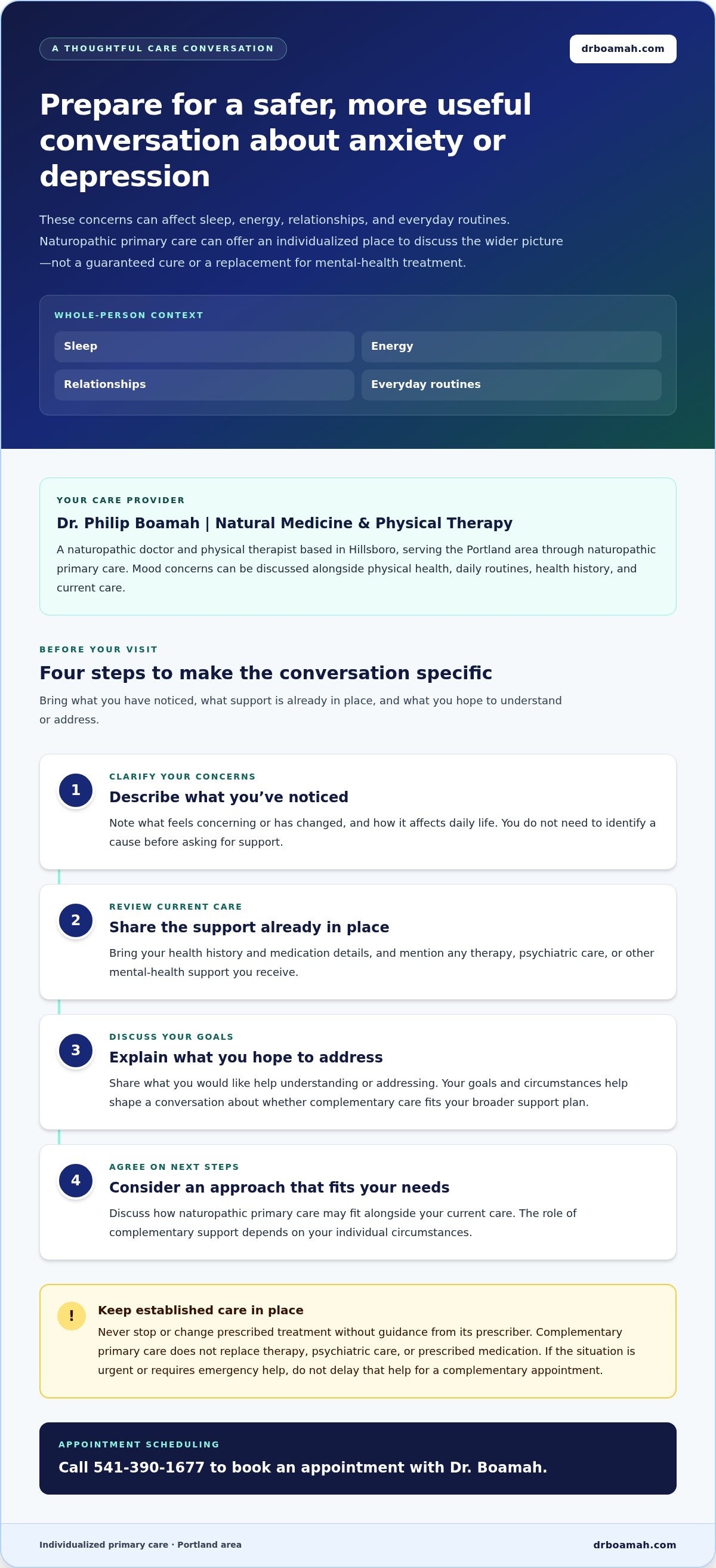
Make the first conversation specific. Before your visit, note what concerns you, how it affects daily life, what care you already receive, and what you hope to address. Dr. Boamah’s naturopathic primary care considers your concerns within the broader context of your health and everyday life, without presuming one cause or a universal remedy. The National University of Health Sciences offers background on approaches to naturopathic support for anxiety.
- Clarify your concerns: Describe what you’ve noticed and how it affects you.
- Review current care: Share your medications, health history, and existing mental-health support.
- Discuss goals: Explain what you’d like help understanding or addressing.
- Agree on next steps: Discuss an approach that fits your needs and current care.
What to discuss before choosing complementary support
Bring details about symptom patterns, effects on daily life, health history, medications, and any therapy or psychiatric care you receive. These specifics make the conversation more useful than starting with an assumption that one physical factor explains everything. For Portland-area patients considering naturopathic support for anxiety and depression, discussing goals and the role of complementary care can help clarify how it fits with the rest of a support plan.
Never stop or change prescribed treatment without guidance from its prescriber. Complementary primary care should support thoughtful coordination, not disrupt established care. If a mental-health situation feels urgent or requires emergency help, do not delay that help to pursue a complementary appointment.
Learn more about Dr. Boamah’s primary care.
Discuss anxiety and depression with Dr. Boamah in the Portland area
For Portland-area residents considering naturopathic support for anxiety and depression, a local primary-care visit offers a place to discuss mood concerns in the context of broader health. Dr. Philip Boamah is a naturopathic doctor and physical therapist based in Hillsboro, serving the Portland area through naturopathic primary care. A visit focuses on understanding your concerns and health context, not promising a particular result.
An individualized visit can include your current care, physical health, daily routines, and personal goals. This provides a basis for discussing whether naturopathic primary care fits into your broader support plan. It does not replace therapy, psychiatric care, or prescribed medication. For a research overview of complementary approaches, see the National Center for Complementary and Integrative Health’s research on complementary health approaches for anxiety.
What happens next when you are ready to seek support?
Start by sharing what has changed, what feels most challenging, and what care or medications are already part of your routine. It may help to think about what you hope to understand or address, even if you are unsure what the next step should be. The conversation can focus on your circumstances and current care without assuming a single cause for anxiety or depression.
If you’re ready to discuss naturopathic support for anxiety and depression in the Portland area, call to book an appointment with Dr. Boamah. Call 541-390-1677 to schedule an appointment.
Take a thoughtful next step toward support
Anxiety and depression can affect more than mood. Discussing your concerns alongside physical health, daily life, goals, and current care can help put them in context. Naturopathic support for anxiety and depression Portland residents explore is individualized primary care, not a guaranteed outcome or a replacement for established mental-health treatment.
Dr. Philip Boamah is a naturopathic doctor and physical therapist based in Hillsboro, serving the Portland area through naturopathic primary care. Learn more about Dr. Boamah’s care, then call 541-390-1677 to schedule an appointment.
You can begin with an honest conversation about what you’re experiencing and what support might fit. A clear next step can help you move forward with care and confidence.
Frequently Asked Questions
Can naturopathic care help with anxiety and depression?
Naturopathic primary care offers a place to discuss anxiety or depression alongside your broader health and everyday context. For Portland residents exploring naturopathic support for anxiety and depression, an individualized visit can be one part of a wider support plan, but it cannot guarantee a particular outcome or replace mental-health care. Dr. Boamah can discuss your concerns and current care with you.
Can naturopathic support replace therapy or antidepressants?
No. Naturopathic care should not be treated as a substitute for therapy, psychiatric care, or prescribed medication. It may complement your existing support, but discuss any changes to medication or other prescribed treatment with the clinician who prescribed it. Keep your current care team informed about other support you’re considering so your next steps remain safe and coordinated.
What should I discuss at a naturopathic visit for anxiety or depression?
Share what you’ve noticed, when symptoms tend to arise, and how they affect sleep, energy, relationships, or daily responsibilities. It’s also useful to bring your health history, a list of medications, and details about therapy or other mental-health care you receive. Explain what you hope to understand or address. This helps shape a personal conversation without assuming one cause or remedy.
What should I do if anxiety or depression feels like an immediate crisis?
Seek urgent help rather than waiting for a naturopathic appointment. If you or someone else may be in immediate danger, call 911 or go to the nearest emergency department. In the United States, call or text 988 for the Suicide & Crisis Lifeline. Naturopathic primary care should not delay crisis support. When you’re safe and ready to discuss ongoing care, call 541-390-1677 to book an appointment.


