
Digestive symptoms alongside changes in mood, stress, or sleep can be difficult to make sense of. A gut-brain connection specialist Portland patients seek can help explore how these concerns may interact, without assuming one automatically explains the other. The gut and brain communicate in both directions, and symptoms deserve more than a one-size-fits-all answer.
Dr. Philip Boamah, a naturopathic doctor and physical therapist serving the Portland area from Hillsboro, provides personalized naturopathic primary care. His care includes SIBO testing and treatment, considered in the context of your symptoms and health history. This article explains how gut and brain function may interact, what an individualized evaluation can involve, and how Dr. Boamah can help you consider practical next steps.
Key Takeaways
- Digestive and emotional symptoms may interact, but one doesn’t automatically explain the other. Consider how symptoms relate to your individual circumstances.
- A thoughtful assessment starts with your concerns and health history, then considers symptom patterns and relevant context before discussing next steps.
- A gut-brain connection assessment may explore how symptoms vary over time and whether gut-related care is relevant to your concerns.
- Dr. Boamah’s naturopathic primary care offers a personalized, evidence-informed way to discuss digestive and day-to-day symptoms.
What the Gut-Brain Connection May Mean for Portland Patients
Digestive changes can occur alongside stressful days, shifts in mood, or changes in sleep and routine. If you notice a pattern, it’s reasonable to wonder whether these experiences are related. The connection is worth understanding, but it doesn’t mean emotional symptoms are “just stress” or that a digestive issue explains everything.
How gut-brain communication relates to symptoms
The gut-brain connection is two-way communication between the digestive system and the nervous system, which includes the brain, spinal cord, and networks of nerves in the gut. Signals pass between them through pathways that help regulate digestion and respond to the body’s internal conditions. The gut microbiome, the community of microorganisms living in the digestive tract, is also part of ongoing scientific study into these interactions. An overview of the gut-brain axis describes the networks involved.
For example, stress may affect how quickly the gut moves or how strongly sensations are felt. In the other direction, persistent digestive discomfort may influence mood or daily activities. These are possible interactions, not a formula for identifying the cause of any individual’s symptoms.
That distinction matters. A possible gut-brain link is a starting point for careful assessment, not a diagnosis or proof that one symptom caused another. Digestive symptoms can have different explanations, and emotional changes can have their own contributing factors. A clinician can consider when symptoms began, how they vary, and what else is happening in your health and routine. For Portland patients exploring the gut-brain connection, the goal is to consider the whole picture rather than reduce symptoms to one explanation.
How a Portland Gut-Brain Assessment Can Consider Your Whole Health
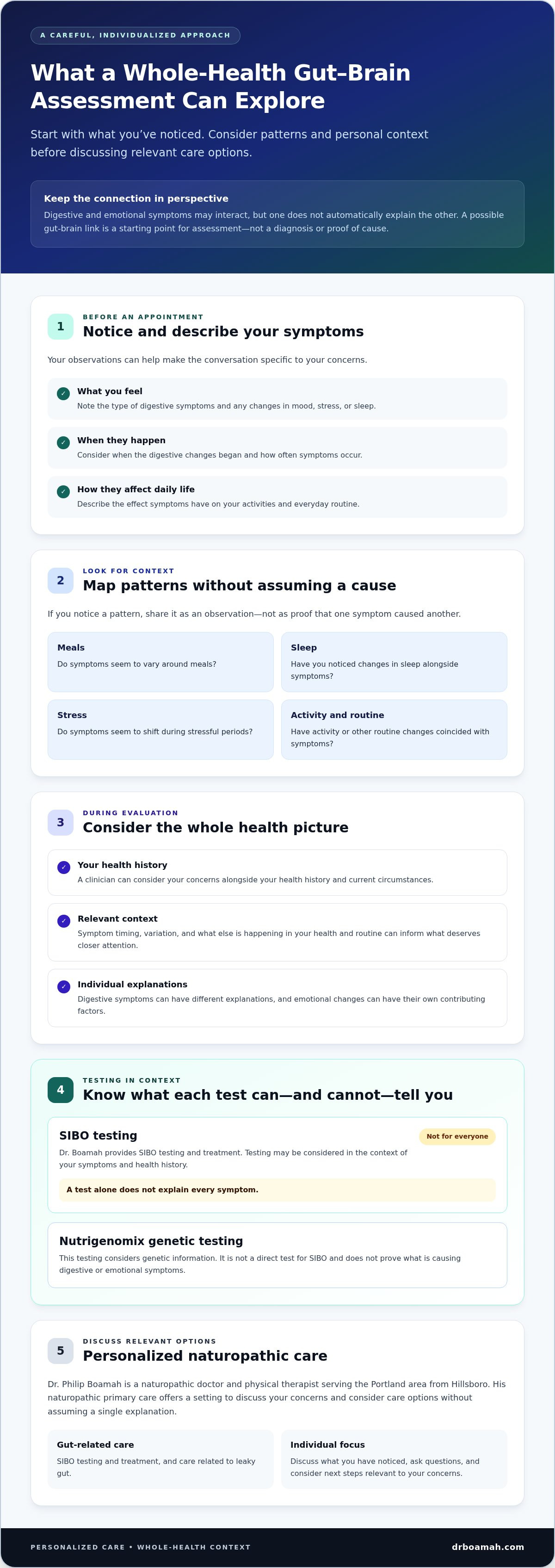
A useful assessment begins with your concerns, not an assumption about what’s causing them. Before an appointment, note when digestive changes started, how often they occur, and whether you notice patterns around meals, sleep, stress, activity, or other changes in your routine. A clinician can consider these observations alongside your health history and relevant context before discussing an individualized plan.
What a personalized evaluation may explore
Describe the type of digestive symptoms you’ve noticed, when they tend to appear, and how they affect daily life. Your health history and current circumstances can help a clinician decide what deserves closer attention. This approach avoids treating symptoms as automatically psychological while also avoiding the assumption that everyone has the same underlying cause.
Testing should be considered in context. Dr. Boamah provides SIBO testing and treatment, but not every patient needs SIBO testing, and a test alone doesn’t explain every symptom. An individualized evaluation helps put testing in perspective rather than relying on a one-size-fits-all checklist.
Genetic testing has a different scope. Nutrigenomix genetic testing considers genetic information; it isn’t a direct test for SIBO or proof of what’s causing digestive or emotional symptoms. A guide to what to expect from a naturopathic doctor can help you understand the care process, while a separate Nutrigenomix testing guide can explain that testing’s role. This stepwise approach helps keep the discussion focused on your concerns and relevant options.
Dr. Boamah’s Naturopathic Care for Gut-Brain Concerns Near Portland
Digestive concerns can be difficult to sort through when they overlap with changes in mood, stress, or everyday routines. Dr. Philip Boamah brings a dual background as a naturopathic doctor and physical therapist to his care for patients in the Portland area from Hillsboro. His naturopathic primary care provides a local setting to discuss your concerns and consider relevant care options without assuming a single explanation.
A local next step for discussing gut-brain concerns
An appointment with Dr. Boamah gives you an opportunity to share what you’ve noticed, ask questions, and discuss possible next steps. His gut-related care includes SIBO testing and treatment and care related to leaky gut. These services can be considered as part of individualized care, without promising a particular diagnosis or result.
Dr. Boamah’s approach connects local naturopathic primary care with attention to each patient’s individual concerns. If you’re looking for a gut-brain connection specialist Portland patients can speak with about personalized naturopathic care, learn more about Dr. Boamah’s naturopathic care. An appointment is a chance to discuss your health questions and care options.
To schedule an appointment with Dr. Boamah, call 541-390-1677.
Take a Thoughtful Next Step Toward Clarity
You don’t need to settle on an explanation for digestive and emotional changes before seeking guidance. A conversation can help you describe what you’ve noticed, ask questions, and consider a next step that reflects your needs rather than a one-size-fits-all assumption. Dr. Boamah’s naturopathic primary care gives Portland-area patients a place to discuss gut-brain concerns and relevant care options.
Make space for a thoughtful conversation about your health. Call Dr. Boamah at 541-390-1677 to schedule an appointment.
Frequently Asked Questions
Is the gut-brain connection a medical diagnosis?
No. The phrase describes communication between body systems, not a standalone condition you can be diagnosed with. A clinician may ask what symptoms you experience, when they occur, and how they affect daily activities, then consider possible explanations in light of your health history. Don’t treat the phrase as proof that digestion caused a mood change, or that mood caused a digestive problem.
Can digestive symptoms affect mood or stress levels?
Digestive symptoms and emotional experiences can occur together, but that doesn’t show which came first or establish a cause. A clinician can consider your broader health picture. Before an appointment, note when symptoms happen, how often, and whether they coincide with meals, sleep changes, or particular activities. These details can make the discussion more specific.
When should I seek urgent care for digestive symptoms?
Seek urgent medical attention for severe or sudden symptoms, signs of significant dehydration, blood in your stool or vomit, fainting, or persistent vomiting. This general safety guidance can’t determine what’s causing your symptoms. If they feel severe or worsen rapidly, don’t wait for a routine appointment; seek urgent attention promptly.
For non-urgent digestive concerns, call 541-390-1677 to schedule an appointment with Dr. Boamah.


